
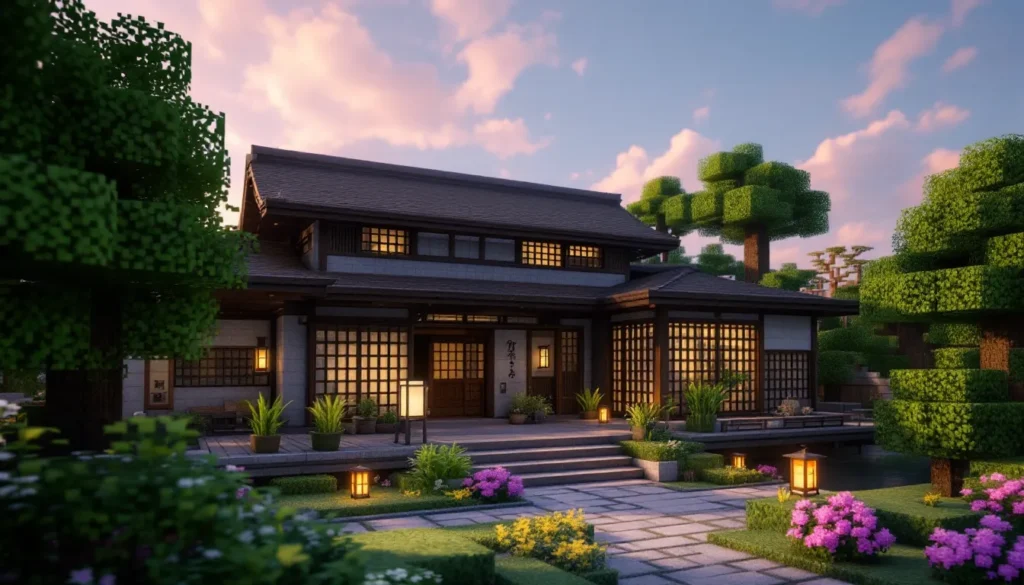

Building a Japanese house in Minecraft is one of the most rewarding architectural projects a player can tackle. Unlike generic cubic structures, Japanese architecture demands attention to aesthetics, proportions, and cultural details, which makes it simultaneously challenging and deeply satisfying. Whether you’re designing a serene home for a survival world, creating a showcase piece for creative mode, or just want to break out of the standard rectangular house template, understanding the fundamentals of Japanese design will transform your building approach. This guide walks through every stage of construction, from material selection to finishing touches, so players of any skill level can pull off an authentic Japanese house that fits seamlessly into a Minecraft landscape.
Table of Contents
ToggleKey Takeaways
- A Japanese house in Minecraft requires a raised wooden platform deck, sloped roof with overhanging eaves, and dark wood framing against light infill to achieve authentic aesthetics.
- Dark oak or spruce logs paired with white or light gray concrete create the essential frame-to-infill contrast that makes a Japanese house visually distinctive and prevents flat appearances.
- Shoji screens built using dark oak trapdoors and light concrete panels are signature Japanese design elements that partition space while maintaining open, flowing interiors.
- Landscaping with stone pathways, bamboo clusters, water features, and intentional empty space is equally important as the structure itself and completes the authentic Japanese house design.
- Consistency in roof angles, material palette, and architectural proportions—rather than complexity—separates impressive Japanese house builds from amateur attempts.
Understanding Japanese Architecture In Minecraft
Key Design Elements Of Traditional Japanese Houses
Japanese architecture revolves around a handful of repeating principles that translate surprisingly well into Minecraft blocks. The most recognizable feature is the sloped, overhanging roof with upturned eaves, something Minecraft achieves through stair blocks, slab combinations, and clever layering. These roofs aren’t just decorative: they create dramatic shadow lines and visual depth that make builds feel intentional rather than accidental.
The second pillar is exposed wooden framing. Traditional Japanese houses showcase their structural beams prominently. In Minecraft, this means using dark oak, spruce, or dark wood variants as visible frame elements against lighter infill materials like white concrete or warped wood. This contrast is essential, it’s the difference between a Japanese-inspired build and something that just looks vaguely “Asian.”
Shoji screens are another signature element. These are lightweight room dividers made from thin wood frames and paper panels. In Minecraft, players replicate them using dark oak trapdoors, fence posts, and white or light gray concrete to simulate paper. They serve both aesthetic and functional purposes: they partition space without feeling heavy, and they let light filter through in subtle ways.
Landscaping matters too. Traditional Japanese homes integrate gardens, stone pathways, and carefully curated vegetation. This isn’t just landscaping, it’s part of the architecture itself. The relationship between the building and its surroundings defines the overall composition.
Why Japanese Architecture Works In Minecraft
Minecraft’s blocky nature might seem at odds with the curves and fluid lines of Japanese design, but it actually works in the builder’s favor. The block grid enforces discipline. Every element must be intentional because nothing comes for free, a stray block looks wrong immediately. This constraint mirrors the Japanese design philosophy of removing excess and keeping only what’s necessary.
Also, Minecraft’s limited slope angles force builders to embrace the staircase-and-slab techniques that naturally produce the angular roof profiles Japanese houses need. The game’s material palette, especially the variety of wood types and concrete colors, provides enough range to differentiate frame, infill, and accent materials without requiring complex custom textures.
Another advantage is that Japanese architecture relies heavily on repetition and symmetry. Both are intuitive in Minecraft. A row of identical window units, repeated roof overhang patterns, or symmetrical garden layouts all feel natural to build and look polished on the first attempt. Beginners can copy a successful section once and paste it around the building, and it’ll still look cohesive.
Finally, the minimalist ethos of Japanese design actually works around Minecraft’s limitations. Players don’t need to fill every corner with detail. Strategic emptiness, open decks, and open courtyards feel intentional, not unfinished. A Japanese house can be elegant and spare where a European castle would feel incomplete.
Essential Materials And Tools You’ll Need
Block Choices For Authentic Japanese Aesthetics
Material selection makes or breaks a Japanese house. Here’s the core palette most builders rely on:
Primary structural wood: Dark oak logs, spruce logs, or dark wood variants form the visible frame. Dark oak is the most common choice because its rich brown contrasts well with lighter infill. Spruce works if building in colder climates where the darker tone feels fitting.
Infill materials: Light colors dominate the walls. White concrete, light gray concrete, birch wood, or bleached oak work well. Some builders use paper blocks from texture packs, but vanilla options are sufficient. The goal is contrast, the frame should pop against the walls.
Roofing: Stairs and slabs are essential. Dark oak stairs and slabs form the roof structure. Many builders layer different colors: for example, dark oak for the main slope and spruce for trim or accent layers. Some add dark gray concrete for shadow lines.
Secondary materials for detail: Use oak trapdoors or dark oak trapdoors to suggest shoji screens. Light gray concrete or diorite form pathways. Spruce fences or oak fences create railings and subtle barriers. Lanterns (both soul lanterns and standard lanterns) provide ambient lighting without screaming “torches here.”
Vegetation: Bamboo is now a staple in Japanese builds since its 1.17 addition. Use it in clusters around the property for garden screens. Oak leaves, spruce leaves, and azalea leaves add canopy depth. Potted plants like potted dripstone or flowers fill courtyards.
Don’t overlook stairs and slabs, they’re the workhorses of Japanese roofing. A single roof can use three to five different types to create layered visual interest.
Preparing Your Building Site And Layout
Before placing a single block, scout your location. Japanese houses work best on relatively flat terrain with modest elevation changes. If the landscape is rugged, consider terraforming the immediate building area into a gentle platform.
Plan overall dimensions. A modest Japanese house is roughly 20-30 blocks wide and 15-25 blocks deep. Larger estates can reach 40+ blocks, but beginners should start smaller, tighter proportions are easier to detail convincingly. Sketch out the footprint on the ground with temporary markers (string, concrete, or torch lines) to visualize spacing before committing.
Decide on a focal point. Traditional layouts center on an entry gate, main courtyard, or a prominent room with southern exposure. Most builds benefit from a small entrance courtyard (roughly 8×8 blocks) that guests walk through before reaching the main structure. This creates a sense of arrival and frames the building beautifully.
Think about internal organization. Japanese houses typically have a central living area, sleeping quarters, and kitchen/storage zones. If designing a single-room build, designate zones subtly with platform height changes or partial walls. Don’t cram different functions into one visual space, separation is key, even if it’s just a few blocks.
Finally, leave space for landscaping. The garden is as important as the structure. Budget at least 1/3 of your plot for pathways, vegetation, stone arrangements, and water features. A Japanese house surrounded by tight empty space looks unfinished: the landscape should feel like an extension of the design.
Building The Foundation And Frame
Creating The Wooden Foundation Platform
Japanese houses traditionally sit on wooden platforms called engawa. In Minecraft, this translates to a slightly raised wooden deck that separates the house from the ground. Start by laying a platform 1-2 blocks high using dark oak logs or dark oak slabs in a grid pattern. Leave small gaps (3-4 blocks) between logs to suggest the deck’s structural posts.
Under the platform, use dark oak or spruce log supports spaced roughly 4-6 blocks apart. This immediately signals “Japanese house” because most other architecture styles build directly into the terrain. The platform creates shadow underneath, adds depth, and gives the building a sense of being embedded in its landscape rather than floating on top of it.
Once the platform is solid, lay out the wall footprint using dark oak logs at the corners and major support points. Typically, place vertical logs 6-8 blocks apart along each wall. These logs don’t need to be continuous posts, often it’s cleaner to use alternating single logs spaced out, which saves materials and creates the “frame and infill” aesthetic naturally.
Keep platform edges clean. If the deck is 2 blocks tall, cap it with a layer of dark oak slabs or stairs facing outward. This prevents it from looking like a raw platform and adds a finished edge.
Constructing The Roof Structure
The roof is where Japanese architecture becomes visually distinctive. Start simple: lay out the basic slope using dark oak stairs angled in one direction across the building’s width. For a 20-block-wide structure, the peak should sit roughly at height 8-10 blocks above the platform. The slope should rise 1 block for every 3-4 horizontal blocks, this gentle pitch looks authentic.
Build the roof in layers:
Layer 1 (base slope): Dark oak stairs set to slope upward toward the center or toward one side. Run these from the wall edge up to the peak.
Layer 2 (secondary slope): Offset dark oak slabs or spruce slabs laid on top of the first layer, creating a visual shadow line that mimics the ridge beam of a traditional roof.
Layer 3 (overhang): Extend the stairs 2-3 blocks beyond the walls on all sides using dark oak stairs placed upside-down. This creates the characteristic overhanging eaves. This overhang is crucial, it’s not just decoration, it makes the building instantly recognizable as Japanese.
Layer 4 (trim): Add dark oak or spruce stairs around the overhang perimeter to create a clean edge. Some builders add a final row of black concrete or dark gray concrete to suggest shadow and add depth.
For the interior of the roof (the ceiling inside the house), use dark oak slabs facing downward. This creates a coffered look that feels intentional, not half-finished.
If the roof has multiple sections or wings, maintain the same pitch and overhang depth across all sections. Inconsistency reads as amateur immediately. Test the angle on one section first, then replicate it exactly elsewhere.
Designing The Exterior Walls And Details
Adding Shoji Screens And Lattice Work
Shoji screens define the Japanese aesthetic. These are sliding panels made from a wooden lattice frame with paper infill. In Minecraft, the simplest approach is to use dark oak trapdoors to suggest the frame and light gray concrete or white concrete for the paper panels.
To create a shoji screen section:
- Mark out a 2-block-tall section on your wall (or larger for doors).
- Place dark oak trapdoors in a grid pattern, spacing them 2 blocks apart horizontally and 1-2 blocks apart vertically. Open them facing outward.
- Fill the spaces between trapdoors with white concrete or light gray concrete slabs or full blocks.
- Add a final layer of light gray concrete across the outer face for a uniform paper-panel appearance.
Alternatively, for a more detailed lattice, use dark oak fence posts arranged in a grid, with white concrete or diorite infill. This creates a more textured, geometric look.
Lattice work isn’t limited to screens, it’s also used for railings, window guards, and decorative fascia. Create geometric patterns using dark oak fences, spruce fences, and dark oak logs. A simple cross-hatch pattern using dark oak stairs oriented at different angles creates visual interest without complexity.
Remember that shoji screens serve a narrative purpose in Japanese homes: they partition space for privacy and function while maintaining a connected, flowing interior. In Minecraft, use them where they’d actually block sight lines, between the public entry area and private rooms, for instance, not just as decoration on every wall.
Creating Sliding Doors And Decorative Elements
Sliding doors in Japanese architecture are typically shoji or fusuma (opaque sliding panels). Recreate them using dark oak trapdoors as the frame and light gray concrete or spruce wood as the door panel itself. A basic sliding door is 1 block wide and 2-3 blocks tall.
Place a dark oak log or fence post vertically on each side of the door opening to suggest the track/frame. The trapdoor itself acts as the sliding mechanism. Open it partway for a partially-open aesthetic, or leave it closed. Some builders place lanterns in the door frame corners for a decorative, functional touch.
For entrance doors to the main building, use dark oak trapdoors in a 2×3 arrangement (two wide, three tall) to suggest a proper hinged or sliding entry. Surround this with dark oak logs or dark oak stairs to create a formal doorway frame.
Decorative elements complete the exterior:
- Overhanging eaves brackets: Place dark oak stairs under the roof overhang to suggest structural bracing. These look intentional, not floating.
- Window trim: Frame any windows with dark oak logs or dark oak stair sets to draw the eye and suggest solid framing.
- Deck railings: Along any open platforms or walkways, use dark oak fences spaced 1 block apart or spruce fences for a lighter aesthetic.
- Lanterns: Hang lanterns or soul lanterns from rafters or overhang beams using fence posts or chains. This suggests both traditional oil lamps and provides ambient lighting.
- Stone accents: Place diorite, andesite, or stone foundation stones around the base perimeter. Japanese homes often sit on raised stone foundations: a row of diorite blocks at ground level suggests this beautifully.
Variety prevents monotony. A wall that’s pure white concrete is clean but dull. Breaking it with repeated shoji screen sections, a few accenting dark oak logs, and some lanterns transforms it into a focal point. The eye needs something to rest on and follow.
Interior Layout And Room Design
Organizing Functional Spaces And Rooms
Japanese interiors prioritize flow and flexibility. Rather than hard-wall divisions, many traditional homes use shoji screens and sliding doors to create adaptable spaces. In a Minecraft build, design interior zones with this philosophy in mind.
Main living area: The central room should be the largest, roughly 10-15 blocks in any direction. This is where the builder spends most time and entertains guests. Keep this room relatively empty to emphasize openness. Add a floor pattern using contrasting dark oak and light gray concrete slabs to define a tatami mat aesthetic, traditional Japanese rooms have visible floor mats in a grid pattern. Space them 2-3 blocks apart for a convincing layout.
Sleeping quarters: A smaller room 6-8 blocks wide. In survival mode, this is where beds go. Suggest traditional futon bedding by placing a simple frame (dark oak logs forming a rectangle) and laying a platform of light gray concrete slabs inside. Add a lantern overhead for functional lighting that feels period-appropriate.
Kitchen/Storage: Dedicate a small room (5-6 blocks wide) with furnaces, crafting tables, and chests. Frame these utilities as built-in cabinetry. Surround chests and furnaces with dark oak logs and dark oak stairs to suggest they’re part of the structure, not scattered items.
Entrance vestibule: Create a small 4-5 block transition area between the outside and main interior. This is where guests remove shoes metaphorically, it’s a pause point before entering the main space. Use a subtle platform height change (0.5 blocks using slabs) to suggest a threshold.
Bathhouse (optional): If building a larger estate, a small room with a cauldron or bath (using dark oak stairs and dark oak slabs arranged in a sunken format) adds authenticity and detail.
Keep hallways minimal or nonexistent. Japanese rooms connect directly to each other via sliding doors. This saves space and maintains the open-plan feel. Use shoji screens or trapdoors to separate zones visually without needing dedicated corridors.
Decorating With Japanese Interior Elements
Interior decoration in Japanese design is sparse and intentional. Every piece should serve a purpose or represent something meaningful. Avoid clutter.
Key decorative items:
- Flower pots: Place potted azalea, potted red dye, or potted white dye in corners and alcoves. Group them in odd numbers (3 or 5) for visual balance.
- Hanging scrolls: These are harder to simulate in Minecraft, but item frames holding paintings work as substitutes. Mount them on dark oak logs sections.
- Lanterns: Already mentioned for exterior, but interior lanterns above doorways or in alcoves provide both light and decoration. Use lanterns (regular) or soul lanterns (cooler tone) depending on mood.
- Water features: A small water block framed with diorite and dark oak logs in an interior courtyard suggests a fountain or small pond. Keeps visual interest high.
- Floor platform variations: Use dark oak and spruce slabs or stairs to create subtle height variations between rooms. A 0.5-1 block change is noticeable enough to separate spaces but not awkward for movement.
- Ceiling interest: Don’t leave ceilings plain. Run dark oak logs or beams across the ceiling in a grid pattern (3-4 blocks apart). This echoes traditional exposed-beam construction and adds depth.
- Alcoves: Carve out small 1-2 block deep recesses in walls and place a single potted plant or lantern inside. These feel intentional and break up flat walls.
Remember: Japanese interior design values negative space. An empty corner isn’t a missed opportunity, it’s intentional breathing room. The best interior decoration is knowing what not to place. A room with 3-4 well-chosen decorative pieces feels more authentic than one crammed with detail.
Landscaping And Outdoor Features
Creating A Japanese Garden Aesthetic
The garden is where Japanese design philosophy shines. Every plant, stone, and empty space carries intention. Start with a overall concept: Is this a peaceful meditation garden, a productive garden, or a formal ceremonial space? The answer shapes material placement.
Stone and gravel: Use diorite, andesite, or gravel as a base layer for the garden ground. Replace some grass with these materials in deliberate patterns, perhaps a circular clearing in front of the house, or a scattered arrangement suggesting natural stone weathering. Gravel in Minecraft doesn’t require tilling and looks authentically low-maintenance.
Plant clusters: Group bamboo in strategic spots, dense enough to feel like a living screen but sparse enough to allow sight lines. Surround bamboo with azalea bushes, flowering azaleas, or dripstone flowers (potted). Layer heights: short flowers at ground level, taller azaleas behind them, bamboo rising above. This creates visual depth that a flat garden lacks.
Water features: A small water source block surrounded by stone or diorite becomes a meditation focal point. Frame it with a dark oak fence boundary to suggest careful containment. Larger estates might include a water channel (1-2 blocks wide, flowing from one area to another) lined with stone slabs or diorite to suggest a stream. Modern players creating larger Japanese water gardens should consider using creative Minecraft ideas to inspire their pond and streamwork.
Moss and vegetation aging: Use moss blocks, moss carpet, and hanging roots (available since 1.17) to suggest age and natural overgrowth. Drape hanging roots from overhanging eaves, place moss in shadowed corners, and scatter moss blocks among garden stones. This makes the garden feel established, not brand-new.
Zen garden principles: Leave intentional empty space, bare gravel or stone with minimal vegetation. This isn’t laziness: it’s control. The contrast between planted and empty areas creates visual rhythm.
Adding Pathways, Fences, And Entrances
Pathways should feel deliberate, not accidental. Use diorite, stone, or dark oak stairs to create a clear route from the entrance gate through the garden toward the main building.
Main pathway: Use diorite slabs or diorite stairs laid in a line 2-3 blocks wide. Every 2-3 blocks, switch orientation or material slightly, a row of diorite full blocks, then diorite stairs, then back. This suggests a carefully laid stone path, not a simple sidewalk. Flanking paths with dark oak logs placed vertically every 4-6 blocks creates the impression of a framed walkway.
Secondary pathways: Smaller diorite slab paths branching off to side gardens or functional areas. These should be 1 block wide and less perfectly aligned, suggesting informal exploration routes.
Fences and boundaries: Traditional Japanese gardens use multiple fence styles to separate zones while maintaining visual connection. Use dark oak fences for formal areas and spruce fences for softer, natural boundaries. Some areas might have no fence at all, open transition into the landscape.
For a gate entrance (the traditional torii concept):
- Create a frame using dark oak logs: two tall vertical posts (4-6 blocks high) spaced 3-4 blocks apart.
- Cap them with a dark oak log or dark oak stairs running horizontally (the “lintel”).
- Add a second horizontal beam 1-2 blocks below for visual balance.
- Use spruce wood or dark oak trapdoors as the actual gate panels. These can be fully open, partially open, or closed depending on aesthetic.
- Frame the gate with diorite or stone blocks at ground level to suggest a permanent structural base.
The gate shouldn’t block passage entirely, it’s more symbolic than functional. In creative mode, it’s purely decorative: in survival mode, it can frame your property boundary.
Deck extensions: Many Japanese homes extend wooden decks into the garden. Add a dark oak slab and log platform (using the foundation platform techniques from earlier) extending from a side entrance. This could overlook a garden feature, provide seating, or serve as a meditation point. Keep these platforms minimal, they’re meant for viewing, not activities.
Advanced Techniques And Custom Details
Using Redstone And Functional Features
Redstone-powered elements can add sophistication without overcomplicating the build. Sliding doors are the most common application. A basic setup uses slime blocks, pistons, and a lever or button to push a dark oak trapdoor open or closed. This is functionally unnecessary but dramatically improves immersion, guests can “slide open” the shoji screens instead of clicking a trapdoor.
For intermediate builders, a multi-stage sliding door using multiple pistons can move an entire wall of trapdoors. Mount a lever or button externally, and watch the entire entrance wall shift open. This requires some spacer blocks behind the wall and careful piston positioning, but it’s achievable and genuinely impressive.
Lighting automation adds ambiance. Daylight sensors combined with lanterns and soul lanterns on repeaters can create lights that activate at night. Position sensor blocks above the roof, connect them to repeaters set to 2-3 tick delays, then to lanterns or redstone lamps throughout the interior. The house gradually brightens at dusk and dims at dawn, subtle, but it transforms the feel.
Water features can incorporate redstone. A small cauldron near the entrance with a dispenser above (triggered by a button) creates a functional hand-washing station. More complex: a water channel fed by a hidden piston-driven water flow that players can trigger, simulating a more-responsive garden fountain.
Keep redstone hidden. Japanese architecture values clean visible surfaces. Run all wiring through interior walls or under the platform deck. Use dark oak blocks or matching materials to disguise mechanisms.
Incorporating Custom Textures And Resource Packs
While vanilla Minecraft is fully capable of authentic Japanese houses, resource packs elevate detail significantly. Packs that enhance wood textures, add more varied concrete colors, or introduce traditional-looking roofing tiles transform the visual impact.
Popular packs for Japanese builds include those from Nexus Mods that focus on Asian architectural elements. Look for packs that retexture wood types to suggest worn, aged materials, this is critical for Japanese aesthetics, which celebrate natural aging and imperfection.
Some builders use packs that add custom block variations like roof tiles or straw thatch, directly replacing stairs or other vanilla blocks. This doesn’t change the build mechanically but visually shifts it from “Japanese-inspired Minecraft” to “feels like actual Japanese architecture.” If playing vanilla without packs, don’t worry, the core design is still solid, just less photorealistic.
Another approach: use banner designs on item frames hung on walls to simulate tapestries or scroll art. Custom banners with geometric patterns or subtle imagery add personalization without mods.
For players wanting guidance on integrating textures effectively, resources like GamesRadar+ provide tutorials on balancing resource pack installation with vanilla gameplay.
Common Mistakes To Avoid
Roof angles that are too steep or inconsistent: The most common error. A roof that rises 1 block per 2 horizontal blocks looks overdone and anime-like, not authentic. Stick to 1 block per 3-4 horizontal blocks. Once established, mirror that exact angle across the entire build.
Missing the platform foundation: A house built directly on grass without a raised wooden deck looks generic. This single element, the elevated deck, transforms a build instantly. Always include it, even if it’s just 1 block high.
Frame-to-infill contrast that’s too subtle: If frame logs and wall infill are similar colors, the structure reads as flat. Dark oak against white concrete works. Dark oak against dark oak doesn’t. Ensure frame colors are noticeably darker or lighter than infill.
Overcomplicating the roof: Beginners sometimes attempt multiple roof peaks, domes, or overly complex angles. Start with a simple single or double-slope roof. Complexity works once fundamentals are solid. A clean, well-executed simple roof beats a chaotic busy one.
Forgetting interior coherence: Decorating the outside beautifully but leaving the interior sparse or empty breaks the immersion. Spend as much thought on interior spaces as the exterior facade.
Clustered windows on one wall: Windows should follow structural logic, aligned with interior room divisions and frame posts. Random window placement looks accidental. Use shoji screens or strategically-placed openings that correspond to interior space boundaries.
Neglecting the garden: The landscape completes the design. A gorgeous house surrounded by bare grass is like serving fine sushi on a paper plate. Invest effort in the garden: it’s not secondary.
Using bright or mismatched wood colors: Mixing jungle wood, acacia wood, and birch in the same frame is chaos. Stick to one or two wood types. Dark oak and spruce work together: birch and dark oak less so. Consistency in material palette is crucial.
Ignoring overhang depth: An overhang that’s only 1 block deep looks like an afterthought. 2-3 blocks minimum creates proper shadow and proportion. The deeper the overhang, the more dramatic and authentic the silhouette.
Inspiration And Building Ideas
Once the core structure is solid, variations and expansions keep the project fresh. Consider these directions:
Expanding into an estate: Add secondary structures like a separate guest house, bathhouse, or storage building. Each should follow the same architectural language but be smaller. Connect them with covered walkways (dark oak posts supporting a roof overhang) to create a cohesive compound.
Seasonal updates: Rebuild the garden seasonally. Swap vegetation during different times of year, adjust water features, or add snow layers in winter.
Multi-building villages: Scale up to a full Japanese village compound with a central temple-like structure, homes for multiple residents, market areas, and communal gardens. This is ambitious but shows how Japanese design principles scale beautifully.
Gameplay integration: Design the house to serve specific survival functions. Orient the main room toward water for fishing. Position storage rooms near the center for security. Create a rooftop observation deck for mob detection. Function and form aren’t mutually exclusive.
Modern Japanese fusion: Blend contemporary elements like amethyst blocks, copper roofing, or deepslate foundations with traditional forms. This creates an “updated” feel while maintaining cultural respect.
Nighttime showcase: Once built, experience the house at night. Lanterns casting light across the garden, shoji screens glowing from interior lamps, this is when Japanese architecture truly shines. Design lighting to be beautiful from both inside and outside.
For those seeking broader building inspiration beyond just Japanese houses, exploring game guides and architectural tips can spark creative directions and help builders refine their approach to structuring larger Minecraft projects.
Filming and sharing: Japanese builds are visually stunning and photograph (screencap) beautifully. Consider camera angles and lighting for sharing with the community. A well-positioned shot of the house at sunset, reflected in a garden pond, is more compelling than a raw overhead view.
The beauty of a Japanese house in Minecraft is that it’s simultaneously a finished product and an ever-evolving space. Builders can inhabit it, modify it seasonally, expand it, and refine details indefinitely. The design philosophy, minimalism, intentionality, respect for materials, translates directly to Minecraft, making Japanese architecture one of the most rewarding genres to build.
Conclusion
Building a Japanese house in Minecraft is achievable at any skill level, and the result is one of the most distinctive and satisfying projects a player can tackle. The architecture’s focus on clean lines, material contrast, and intentional design actually works in favor of Minecraft’s blocky nature rather than against it. By following the foundational principles, a raised platform deck, a properly-sloped roof with overhanging eaves, visible frame-and-infill construction, and authentic landscaping, any builder can create something that looks polished and feels cohesive.
The progression from understanding design elements through material selection, foundation work, exterior detailing, interior layouts, and garden integration builds competence step by step. Early builds might be modest single-room structures: with practice, they evolve into sprawling estates with multiple wings, functional details, and custom flourishes.
What separates a mediocre attempt from an impressive one isn’t complexity, it’s consistency and restraint. A simple, clean, well-executed design beats an overstuffed chaotic one. Japanese architecture teaches this lesson: less is more, and what remains should be intentional.
Start with the core elements. Build the deck platform, establish a clean roof pitch, frame the walls in dark wood against light infill, add shoji screens and a proper entrance, and landscape thoughtfully. Once comfortable with these fundamentals, layer in custom details, redstone features, and stylistic flourishes. Beginners shouldn’t feel pressured to perfect every element on the first attempt, Japanese builds reward iteration and refinement over time. Each new session adds another layer of polish.
The most important thing is to build. Minecraft is forgiving: blocks can be replaced, sections rebuilt, and mistakes corrected. Whether in creative mode or survival, whether this is a standalone dream home or part of a larger world, the journey of constructing a Japanese house is as rewarding as the finished product. Start building, and enjoy the process.


