
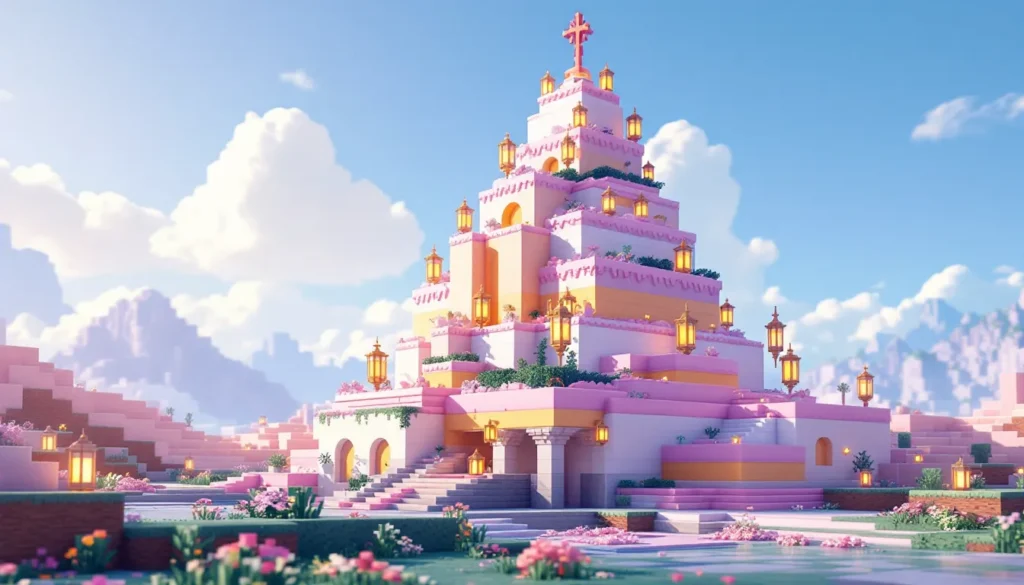

Minecraft’s creative mode has always been about pushing boundaries, and cake structures are one of the most satisfying ways to practice building fundamentals while having fun. Whether you’re decorating a multiplayer spawn area, creating a centerpiece for your base, or designing an elaborate multi-tiered cake for a birthday-themed server event, knowing how to construct a visually impressive cake gives you a foundation to experiment with colors, textures, and scale. The humble cake block in Minecraft has evolved beyond a simple food item, it’s become a canvas for architectural creativity. Players are building everything from realistic bakery displays to fantastical magical structures that blur the line between practical building and pure artistry. If you’ve ever felt stuck staring at a blank creative plot, wondering what to build next, exploring some proven minecraft cake design and minecraft birthday cake ideas can spark inspiration and teach you techniques that’ll elevate your entire building repertoire.
Table of Contents
ToggleKey Takeaways
- Minecraft cake ideas serve as accessible projects that teach fundamental building skills including color theory, proportions, and texture layering while being forgiving to experiment with.
- Simple vanilla and checkerboard cake designs work best at scale because they read clearly from a distance and can be executed at any size without added complexity.
- Tiered wedding cakes and themed designs—from fantasy to biome-inspired structures—require stronger architectural skills but deliver impressive focal points that draw player engagement and admiration on multiplayer servers.
- Advanced minecraft cake designs benefit from intentional color selection using complementary or analogous palettes, varied block textures (concrete, wool, terracotta, stained glass), and strategically placed decorative details like lanterns and chains.
- Survival mode cake building rewards thorough planning, resource gathering from biomes, and efficient construction techniques like scaffolding and bulk material processing that accelerate timeline and reduce waste.
- Tools like WorldEdit and VoxelSniper significantly enhance cake building speed and precision, while resource packs elevate visual impact—but mastering design fundamentals remains essential before leveraging advanced tools.
Why Cakes Matter In Minecraft
Cakes in Minecraft occupy a unique space between functional and decorative. Unlike most food items, cakes are placed as blocks in the world, giving them a permanent visual presence that players design around. They’ve become a staple in creative communities because they teach fundamental building skills: working with block palettes, understanding scale, and layering textures for depth.
Building cakes also breaks up the monotony of standard architectural projects. While everyone’s got a base, a farm, or a nether portal, a thoughtfully designed cake structure stands out. It shows that a player cares about aesthetic details, not just survival efficiency. On multiplayer servers, a well-crafted cake area becomes a natural gathering spot, players pause their wandering to admire the craftsmanship.
Beyond aesthetics, cakes are practical for event decoration. Server administrators hosting tournaments, seasonal celebrations, or themed events use cake builds as focal points for spawn areas and gathering hubs. They’re also forgiving to build, unlike redstone contraptions, cake failures don’t crash your world: they just look unfinished. This makes them perfect for experimenting with new techniques without stakes. When you’re learning color theory, proportion, and detail work in Minecraft, cakes offer a low-pressure playground. The skills you develop building them transfer directly to every other structure you’ll create.
Classic Minecraft Cake Designs
Simple Vanilla Cake
The most straightforward minecraft cake ideas start with a basic vanilla cake, a block or two of cake surrounded by complementary colors. Use wool or concrete in cream, light gray, and white tones to create the “frosting.” Stack a few layers vertically, placing colored blocks on the sides and a lighter shade on top. Add lanterns or candles on the cake block itself for ambient lighting and visual warmth.
This approach works because simplicity reads well from a distance. On busy servers with multiple structures competing for attention, a cleanly executed simple cake draws the eye. Keep proportions 1:1:3 (width:depth:height) for stability and visual balance. Pair it with a wooden platform or grass block base to ground the structure. First-time builders often overthink cake design, but starting here teaches you the fundamentals: block selection, color harmony, and negative space.
Checkerboard Cake
A checkerboard cake uses alternating block types to create visual rhythm. Alternate white concrete and chocolate brown concrete in a grid pattern on each layer. This creates the illusion of a frosting texture and adds visual interest without complexity. The pattern repeats naturally, making it forgiving to execute at any scale.
The checkerboard technique scales beautifully. Build it small for a garden accent or massive for a landmark structure. Each layer can shift the pattern slightly to create depth, offset the checkers by half a block on alternating layers for a 3D effect. Add a **frosting” stripe using cake blocks or pink concrete around the middle for a classic bakery look.
Tiered Wedding Cake
Tiered cakes demand stronger architectural skills but deliver impressive results. Start with a large base layer (perhaps 7×7 blocks), then step inward to create a 5×5 second tier and a 3×3 third tier. Connect each tier with stairs or slabs to create visual transitions rather than hard edges. Use different colors for each tier, pale yellow, cream, and white create a classic gradient that reads as elegant from a distance.
Add frosting details using pink concrete, magenta wool, or pink stained glass in decorative patterns around each tier’s edge. Place cake blocks at the top and use lanterns as “candles.” For multiplayer servers or realm events, tiered wedding cakes serve as stunning focal points. They photograph well and demonstrate intermediate-level building competence. Construction takes longer than simple designs, but the impact justifies the time investment. Players stop to admire these, making them perfect for high-traffic areas.
Themed Cake Designs
Fantasy And Magic-Themed Cakes
Fantasy cakes swap realistic pastry colors for magical palettes. Use purple concrete, dark purple wool, and amethyst blocks to create an enchanted atmosphere. Build the cake structure, then surround it with purple candles, amethyst crystals, and soul lanterns for eerie lighting. Add floating platforms around the cake using dark oak trapdoors or purple stained glass to suggest levitation magic.
Magic-themed designs benefit from asymmetry, don’t center everything. Tilt decorative elements, stagger heights, and create visual chaos that suggests supernatural energy. Place end rods or lightning rods around the cake to reinforce the magical theme. For Halloween or dark fantasy servers, add blackstone, crying obsidian, and sculk blocks to push the aesthetic toward ominous rather than whimsical.
Biome-Inspired Cakes
Biome-inspired cakes pull color palettes directly from Minecraft’s environments. A desert cake uses sand, sandstone, orange terracotta, and yellow concrete. Stack layers and add cactus around the perimeter for protection and authenticity. A forest cake incorporates dark oak logs, oak leaves, green concrete, and grass blocks in layered patterns. A nether cake goes bold with red nether brick, crimson nether wood, blackstone, and magma blocks.
Biome cakes work because they leverage colors players already recognize from the landscape. The structure doesn’t have to look like an actual cake, it just needs to evoke the biome’s feeling. This approach is perfect for themed server areas or region markers. A desert cake in a desert biome doubles down on environmental storytelling. Players immediately understand the design intent without explanation.
Pop Culture And Character Cakes
Character and pop culture cakes push creative boundaries the furthest. Build recognizable shapes using pixel art principles scaled up to block size. A Kirby cake uses pink concrete, white concrete, and black wool in rounded layers with simple facial features. A Pokémon-themed cake might feature Pikachu’s yellow coloring with red concrete accents. A Creeper cake uses lime green wool with black lines for the iconic pixelated face.
Character cakes require planning. Sketch your design on paper or use an online pixel art converter first. Start building from the base upward, constantly stepping back to check proportions. Oversized features that read clearly from distance often look better than detailed accuracy. On servers hosting birthday events, character cakes matching the birthday person’s favorite game or franchise create memorable moments. These builds spark conversations and showcase your personality as a builder.
For more advanced building inspiration, exploring minecraft examples can reveal techniques other builders use to execute character designs at scale.
Advanced Building Techniques For Cake Structures
Using Colored Blocks And Textures
The choice between concrete, wool, stained glass, and terracotta fundamentally changes how a cake reads visually. Concrete provides vibrant, clean colors perfect for modern aesthetics. Wool softens edges and creates a fabric-like appearance. Terracotta offers earthy, muted tones that feel handcrafted. Stained glass introduces transparency and light interaction, a transparent element among solid blocks creates visual interest.
Layering different block types prevents monotony. A cake with an all-concrete exterior can feel flat. Introduce wool as frosting, concrete as the cake body, and stained glass as decorative panels on the sides. This textural variety catches light differently, creating depth even on a relatively simple structure. On Bedrock Edition servers where cross-platform play matters, avoiding blocks that render differently between Java and Bedrock ensures your cake looks consistent for all players.
Color theory applies directly: complementary colors (orange and blue, red and cyan) create visual tension and excitement. Analogous colors (colors adjacent on the color wheel) create harmony. A cake using only analogous warm tones feels cohesive and elegant. Introduce a single complementary accent color, maybe a bright blue ribbon around a warm-toned cake, and it pops without feeling chaotic.
Adding Details With Decorative Elements
Details separate good builds from memorable ones. A naked cake structure reads clearly but feels incomplete. Adding lanterns, candles, buttons, fence posts, and flower pots around a cake transforms it. Place small decorative elements at tiers’ edges, staggered flower pots with flowers, lanterns hanging from the sides via chains, or fence posts creating a perimeter.
Details should serve a visual purpose. Don’t scatter random blocks, cluster them intentionally. A ring of potted flowers around the cake’s base creates definition. Hanging chains with lanterns suggest frosting drips. Buttons placed in patterns on the sides suggest piping or texture. These additions cost minimal resources but yield significant visual returns.
Alternative detail approaches include custom signage using item frames with enchanted books or other colorful items, armor stands dressed in celebration items, and tripwire hooks arranged as decorative rivets. On servers with custom textures, resource packs can make standard blocks look entirely different, opening additional design possibilities.
Scaling And Proportion Tips
Scale affects how builds communicate. A one-block-tall cake reads as a decorative accent. A five-block-tall cake becomes a focal structure. A twenty-block-tall cake demands surrounding space to avoid overwhelming the landscape. When building large cakes, maintain proportions consciously, don’t just stack blocks vertically. Each tier should relate to the one below it mathematically. A 7×7 base stepping to 5×5, then 3×3 creates a logical visual hierarchy (roughly two-thirds size reduction per tier).
Proportional heights matter equally. Don’t make each tier one block tall, they’ll feel thin and unstable. Make tiers two or three blocks tall minimum. This creates visual weight that balances the horizontal dimensions. A tall, thin cake looks fragile. A squat, wide cake looks sturdy. Match the proportions to your design’s intent.
Standing back frequently prevents mistakes. Build a few layers, move to a distance equal to the cake’s height, and evaluate. Does it read clearly? Do colors harmonize? Is the silhouette interesting? Problems identified early are trivial to fix. Problems ignored compound. Professional builders spend more time evaluating than building, they’re constantly stepping back, rotating their view, and considering how distant players perceive their work.
Interactive And Functional Cake Ideas
Parkour Cake Challenges
Transforming a cake into a playable structure creates engagement beyond aesthetics. Build a parkour course that guides players through, around, and over the cake using jumping puzzles. Create platforms using slabs and stairs that players navigate while avoiding lava or maintaining balance on narrow ledges. The cake itself becomes the centerpiece, with parkour routes weaving around its structure.
Parkour cakes work best on servers with active communities. Difficulty scales flexibly, easy cakes use wide platforms and short jumps, suitable for newer players. Hard cakes demand precise timing and movement knowledge. Adding checkpoints with beds or respawn anchors lets players retry sections without restarting. Track completion times and reward fast players with titles or achievements if your server supports it.
Design the cake structure first, then build parkour around it. Don’t force the cake to serve the parkour, let the parkour enhance the cake’s visual presence. Players will remember both the challenge and the impressive decoration they conquered.
Cake-Themed Mini-Games
Creative game modes centered on cakes expand possibilities. A decoration challenge gives players limited blocks and time to decorate a pre-built cake. Judges vote on aesthetics, teaching design principles through friendly competition. A baking race requires players to gather ingredients and “assemble” a cake structure, first to complete accurate proportions wins. A cake hunt hides small decorated cakes throughout a world: players find all of them to win prizes.
Mini-games transform passive observation into participation. Casual servers benefit from these light, engagement-focused activities. They’re easy to set up using command blocks or plugins and require minimal resources. Running a monthly cake decoration contest builds community investment in the server’s appearance.
Multiplayer Cake Building Projects
Community cakes built collectively create ownership and pride. Divide a massive cake design into sections, each builder responsible for one tier or one side. Establish a color scheme and proportion guidelines, then let builders execute their sections. Results vary stylistically but create authentic variety.
Alternatively, organise rotating builders: start a cake, player A builds for an hour, then player B continues, then C. This creates unexpected stylistic mashups and keeps participation high. The final structure represents everyone’s contribution, making it genuinely community-owned.
Large multiplayer projects benefit from clear planning and leadership. Designate a “cake architect” who ensures overall cohesion. Establish resource pools so builders aren’t competing for materials. Celebrate completion publicly, announce it in chat, use it as a spawn point, or feature it in server updates. Public recognition motivates continued participation.
For builders seeking additional creative direction, reviewing creative minecraft ideas provides fresh approaches to collaborative projects and community engagement.
Building Cakes In Survival Mode
Resource Gathering And Planning
Survival mode imposes constraints that actually improve cake design through limitation. Concrete requires cement, dye, and water. Getting varied colors demands mining or farming specific materials. Wool requires finding sheep and farming dye crops. These constraints force intentional color choices, you can’t casually use fifteen colors when obtaining each costs significant effort.
Plan survival cakes thoroughly before building. Use creative mode to prototype, then calculate exact resource requirements. A medium cake might need 200 concrete blocks, 50 wool blocks, 30 deco elements, and miscellaneous support blocks, know these numbers before starting. Establish a resource farm area dedicated to cake building. Efficient dye farms and mob spawning systems generate materials continuously, preventing production bottlenecks.
Gather efficiently by targeting biomes with relevant resources. Desert biomes supply sand for concrete. Flower plains yield dyes. Forests provide wood. Early mining runs should focus on locating lapis, redstone, and coal needed for blue and black dyes. Strategic mining routes that chain biomes minimize travel time.
Document your cake plan in a chest next to the build site. Keep building material organized in separate chests by type. Label chests clearly using signs. This prevents mid-build scrambling where you can’t find that one dye color you need. Surviving builders who structure their supply chains properly build faster and waste fewer resources.
Time-Efficient Construction Methods
Survival building rewards efficient technique. Pre-craft all concrete before building, mixing it in bulk prevents repeated trips to furnaces. Use hoppers and furnaces to automate material processing. Position your base’s crafting area near the cake site to minimize backtracking.
Build tall structures bottom-up with scaffolding, it’s faster than placing blocks and jumping. Deconstruct scaffolding as you ascend, collecting it for reuse. This method conserves resources and accelerates vertical construction significantly. For horizontal layers, place blocks methodically rather than randomly, establishing rhythm that trains muscle memory for faster placement.
Use resource pack textures if your server permits custom packs. Some builds feel incomplete because standard block textures limit visual impact. Custom textures can make concrete look like frosting, wool like fondant, and stairs like piping, adding perceived quality without extra blocks.
Cooperative building accelerates completion. Two builders working simultaneously cover 40% more area than one builder in the same time. Divide logical sections and work in parallel. Multiplayer cake projects that might take one player weeks complete in days with coordinated effort.
A solid minecraft guide covering efficient resource gathering and construction techniques will accelerate your cake building timeline in survival.
Best Tools And Mods For Cake Building
Vanilla Minecraft supplies adequate tools for cake building, but specific mods and resource packs enhance the experience significantly.
WorldEdit transforms structural editing on servers. Draw a selection of blocks, rotate them, mirror them, and paste them repeatedly, essential for building symmetrical cakes quickly. On servers running plugins, WorldEdit reduces hours of tedious placement to minutes of command input. Professional builders consider WorldEdit non-negotiable for serious projects.
VoxelSniper allows precise block placement and shaping. Rather than placing individual blocks, VoxelSniper lets you paint areas with specific patterns, ideal for adding frosting textures or detailed surfaces. It’s particularly powerful for curved surfaces, something cakes benefit from significantly.
Resource packs like Mizuno’s 16 Craft or Default++ enhance block aesthetics, making standard colors pop with added texture and detail. A concrete block in default textures looks flat: the same block in a quality resource pack gains depth and visual interest. On servers where players can opt into resource packs, suggesting the build’s intended pack improves overall visual impact.
Replay Mod captures your building process in cinematic quality. Record time-lapse videos of your cake’s construction from multiple angles, creating shareable content that showcases your work. This isn’t essential for building but transforms how you present finished projects to the community.
For Bedrock Edition players on Console or Mobile platforms, mod options are limited. But, Marketplace content sometimes includes building tools and creators that expand creative possibilities. Verify compatibility before investing in purchases, not all marketplace content works across all platforms.
According to resources like GamesRadar+, Minecraft building communities frequently discuss emerging mods and tools that streamline creative work. Staying updated on available tools prevents you from building inefficiently with outdated methods.
Regardless of tools used, the fundamentals remain: thoughtful color selection, proportional structure, and intentional detail placement. Tools accelerate execution but can’t substitute for design knowledge. Build fundamentals first: then leverage tools to accelerate your timeline and increase polish.
Conclusion
Cake building in Minecraft bridges creative expression and technical skill development. Whether you’re constructing a simple vanilla cake to practice basics or designing a massive character cake as a server centerpiece, the principles remain consistent: intentional color selection, proportional design, and layered details that read from distance.
The journey from “what should I build?” to confident execution of complex minecraft cake designs develops skills transferring across every building project. Learning texture theory while building a checkerboard cake improves your ability to design castles and dungeons. Understanding scale through tiered wedding cakes informs how you construct landscapes and landmarks. Executing character cakes teaches pixel art conversion and silhouette readability crucial for any detailed structure.
Start with simple designs, practice fundamental techniques, and progressively increase complexity. Your first cake won’t be gallery-ready, that’s expected. Your tenth cake will show measurable improvement. Your hundredth cake could inspire server-wide recognition. Cake building is accessible enough for newcomers yet deep enough for veteran builders to refine their craft indefinitely.
The community’s enthusiasm for minecraft birthday cake ideas and themed celebrations suggests this trend isn’t slowing. More servers are hosting events centered on decorated structures, creating demand for skilled builders who understand proportions, colors, and creative execution. Whether you’re building for personal satisfaction, community engagement, or simply exploring creative possibilities, cakes offer rewarding projects that develop expertise while delivering visible, shareable results. Your next cake, whatever form it takes, awaits.


