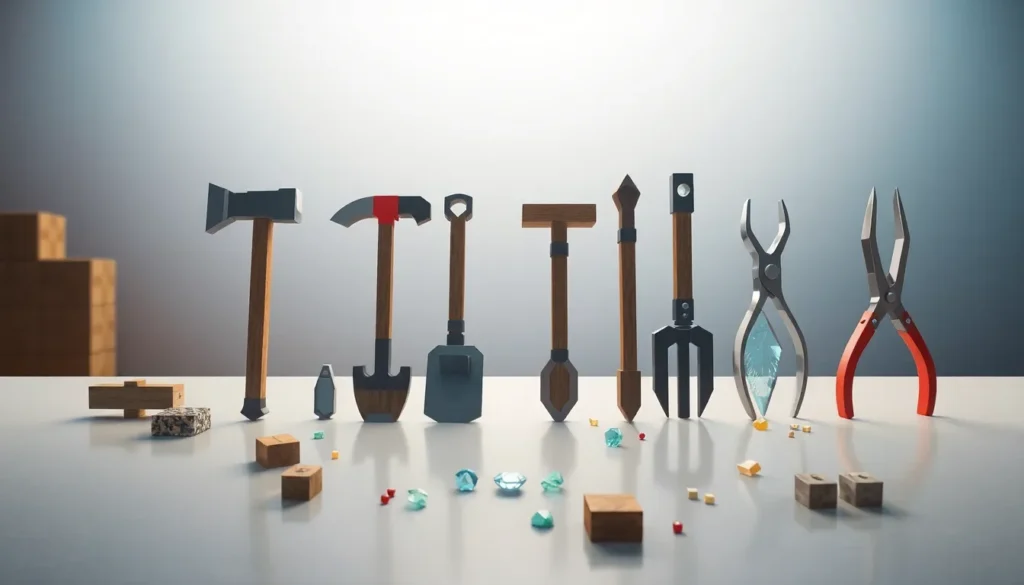

Minecraft tools define how players interact with the game world. From breaking blocks to harvesting resources, every action depends on having the right equipment. Whether someone is mining diamonds deep underground or chopping wood for a new base, tools determine speed, efficiency, and success.
This guide covers everything players need to know about Minecraft tools. It explains each tool type, breaks down material differences, walks through crafting recipes, and shares strategies for getting the most out of every pickaxe, shovel, and axe. New players and veterans alike will find useful information here.
Key Takeaways
- Minecraft tools include six main types—pickaxe, axe, shovel, hoe, fishing rod, and shears—each designed for specific tasks.
- Iron tools offer the best balance of durability and performance for everyday use, while netherite tools provide the strongest stats for challenging activities.
- Crafting tools follows consistent patterns using sticks and material blocks, so players should prepare multiple sets before exploring.
- Enchantments like Efficiency, Unbreaking, Fortune, and Mending dramatically extend tool power and lifespan.
- Always match your tool to the task—using the correct Minecraft tool preserves durability and saves valuable time.
- Carry backup tools on mining expeditions and store enchanted or netherite gear safely to avoid permanent loss.
Types of Tools in Minecraft
Minecraft features six main tool types. Each serves a specific purpose and works best on certain block types.
Pickaxe – The pickaxe mines stone, ores, and mineral blocks. Players need pickaxes to collect iron, gold, diamonds, and other valuable materials. Using the wrong tool on these blocks yields nothing.
Axe – Axes chop wood faster than any other tool. They also deal significant damage in combat, making them useful weapons in a pinch.
Shovel – Shovels dig dirt, sand, gravel, and snow quickly. They’re essential for landscaping projects and clearing paths.
Hoe – Hoes prepare farmland for planting crops. Right-clicking dirt or grass with a hoe turns it into tilled soil.
Fishing Rod – Fishing rods catch fish, treasure, and junk from water sources. They can also pull mobs and items toward the player.
Shears – Shears collect wool from sheep without killing them. They also harvest leaves, vines, and cobwebs intact.
Understanding these Minecraft tools helps players prepare for any situation. A well-stocked inventory includes at least one of each type.
Tool Materials and Durability
Tool materials determine durability, mining speed, and which blocks a tool can break. Minecraft offers six material tiers for most tools.
Wood – Wooden tools are the weakest option. They have 59 uses and mine slowly. Players craft them first to bootstrap their resource gathering.
Stone – Stone tools offer 131 uses. They’re cheap to make and work well during early game.
Iron – Iron tools provide 250 uses and mine faster than stone. Most players rely on iron tools for daily activities.
Gold – Golden tools mine the fastest but break after only 32 uses. They accept enchantments easily, which makes them situationally useful.
Diamond – Diamond tools last for 1,561 uses. They mine all block types except ancient debris and can be upgraded.
Netherite – Netherite represents the strongest material in Minecraft. These tools survive 2,031 uses, resist fire and lava, and deal extra damage. Players upgrade diamond tools with netherite ingots at a smithing table.
Choosing the right material matters. Iron tools offer the best balance of cost and performance for regular use. Diamond and netherite tools work best for mining expeditions and boss fights.
How to Craft Basic Tools
Crafting Minecraft tools follows a consistent pattern. Players need sticks and their chosen material.
Crafting a Pickaxe
Place three material blocks across the top row of a crafting table. Put two sticks in a vertical line beneath the center block. This creates a pickaxe.
Crafting an Axe
Arrange two material blocks in the top-left corner. Place one block directly below them. Add two sticks down the center column. The result is an axe.
Crafting a Shovel
Position one material block at the top center. Place two sticks directly beneath it. This makes a shovel.
Crafting a Hoe
Set two material blocks across the top-left. Add two sticks going down from the right block. Players now have a hoe.
Crafting a Fishing Rod
Diagonally place three sticks from bottom-left to top-right. Attach two strings hanging down from the top-right stick.
Crafting Shears
Place two iron ingots diagonally in a crafting grid. Shears only come in iron.
Players should craft multiple sets of Minecraft tools before exploring. Running out of pickaxes in a deep cave creates serious problems.
Enchantments to Improve Your Tools
Enchantments make Minecraft tools significantly more powerful. Players apply enchantments using an enchanting table or anvil.
Efficiency – This enchantment increases mining speed. Efficiency V on a diamond pickaxe tears through stone almost instantly.
Unbreaking – Unbreaking extends tool lifespan by reducing durability loss. At level III, tools last roughly four times longer.
Fortune – Fortune increases drop rates from ores. A Fortune III pickaxe can yield four diamonds from a single ore block.
Silk Touch – Silk Touch lets players collect blocks in their original form. It works great for harvesting glass, ice, or ore blocks directly.
Mending – Mending repairs tools using experience orbs. Combined with Unbreaking, a tool can theoretically last forever.
Luck of the Sea – This enchantment improves fishing rod catches. Players find more treasure and less junk.
Note that Fortune and Silk Touch cannot exist on the same tool. Players must choose one or keep separate Minecraft tools for different purposes.
Enchanting requires experience levels and lapis lazuli. Building an experience farm helps maintain a steady supply of both.
Tips for Managing and Preserving Your Tools
Smart players extend the life of their Minecraft tools through careful management.
Repair at an Anvil – Combining two damaged tools creates one with combined durability. Adding material to a tool at an anvil also restores durability.
Use Mending Whenever Possible – Mending beats all other repair methods. Players should prioritize finding or trading for Mending books.
Match Tools to Tasks – Don’t mine dirt with a pickaxe. Using the correct tool for each block type preserves durability and saves time.
Carry Backup Tools – Experienced players bring spare pickaxes on mining trips. One breaking unexpectedly shouldn’t end an expedition.
Store Valuable Tools Safely – Keep netherite and enchanted tools in chests when not needed. Dying with them in inventory risks permanent loss.
Avoid Gold for Regular Use – Golden tools break too quickly even though their speed. Save gold for other recipes.
Grindstone for Disenchanting – A grindstone removes enchantments and restores some experience. Use it to repurpose tools with unwanted enchantments.
These habits help players get maximum value from every resource they invest in their Minecraft tools.