
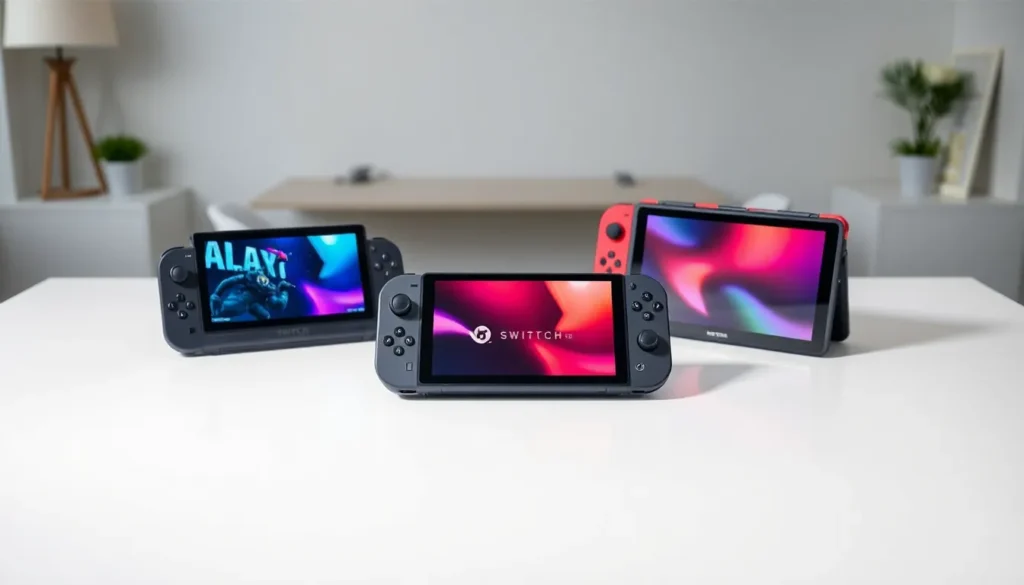

The Steam Deck vs other handheld gaming PCs debate has become one of the most common questions among portable gaming enthusiasts. Valve’s Steam Deck changed the market when it launched in 2022, but competitors have caught up with their own offerings. The ROG Ally, Nintendo Switch, and Lenovo Legion Go each bring something different to the table. This comparison breaks down what matters most, performance, price, game library, and user experience, so buyers can make a confident choice.
Table of Contents
ToggleKey Takeaways
- The Steam Deck offers the best price-to-performance ratio among handheld gaming PCs, starting at $549 for the OLED model.
- Steam Deck vs ROG Ally comes down to value versus raw power—the ROG Ally has stronger specs, but the Steam Deck wins on ergonomics and battery life.
- The Nintendo Switch can’t match Steam Deck performance, but its exclusive titles like Zelda and Mario make it irreplaceable for Nintendo fans.
- Steam Deck vs Legion Go favors the Deck for portability, while the Legion Go appeals to users who prioritize its larger 8.8-inch display.
- Most PC gamers find the Steam Deck hits the sweet spot with its polished SteamOS experience, trackpads, and gyro controls.
- Consider your priorities—choose Steam Deck for value, ROG Ally for performance, Switch for exclusives, or Legion Go for screen size.
Steam Deck Overview and Key Features
The Steam Deck runs on a custom AMD APU with a Zen 2 CPU and RDNA 2 GPU. Valve offers two main versions: the LCD model and the newer OLED model. The OLED version features a brighter 7.4-inch HDR display, better battery life, and faster storage.
Key specs for the Steam Deck OLED include:
- Display: 7.4-inch OLED, 1280×800 resolution, 90Hz refresh rate
- Storage: 512GB or 1TB NVMe SSD
- Battery: 50Wh (up to 12 hours for lighter games)
- Weight: 640 grams
- Price: Starting at $549
The Steam Deck runs SteamOS, a Linux-based operating system. This means it plays most Steam library games natively or through Proton compatibility. Users can also install Windows if they prefer.
One major advantage of the Steam Deck vs competitors is its price-to-performance ratio. Valve sells the hardware at thin margins, making it more affordable than similar devices. The trackpads and gyro controls add precision that most handheld PCs lack.
The Steam Deck also supports docking. Players can connect it to a TV or monitor, pair a controller, and use it like a console. This flexibility makes it a solid all-in-one device for gamers who want both portable and home gaming options.
Steam Deck vs ROG Ally
The Steam Deck vs ROG Ally comparison comes down to raw power versus value and ecosystem.
ASUS released the ROG Ally in 2023 with the AMD Z1 Extreme chip. This processor outperforms the Steam Deck’s APU in most benchmarks. The ROG Ally pushes higher frame rates in demanding games like Cyberpunk 2077 and Starfield.
Performance comparison:
| Feature | Steam Deck OLED | ROG Ally |
|---|---|---|
| CPU | Zen 2, 4 cores | Zen 4, 8 cores |
| GPU | RDNA 2, 8 CUs | RDNA 3, 12 CUs |
| Display | 7.4″ OLED, 90Hz | 7″ IPS, 120Hz |
| RAM | 16GB LPDDR5 | 16GB LPDDR5 |
| Price | $549-$649 | $499-$699 |
The ROG Ally runs Windows 11. This gives it access to Game Pass, Epic Games Store, and any PC game without compatibility concerns. But, Windows on a handheld can feel clunky. The interface wasn’t built for thumbsticks and small screens.
The Steam Deck wins on ergonomics. Its larger body fits hands better during long sessions. The trackpads work great for games that need mouse input. Battery life also favors the Steam Deck, the ROG Ally drains faster under heavy load.
For pure gaming performance, the ROG Ally leads. For overall user experience and value, the Steam Deck holds its ground.
Steam Deck vs Nintendo Switch
The Steam Deck vs Nintendo Switch matchup pits a PC gaming handheld against a dedicated console. These devices serve different audiences, but the overlap is real.
The Nintendo Switch launched in 2017 and shows its age in hardware specs. Its Tegra X1 chip can’t match modern handhelds in raw power. But Nintendo doesn’t compete on specs, it competes on exclusives.
Games like The Legend of Zelda: Tears of the Kingdom, Mario Kart 8, and Animal Crossing only exist on Switch. No amount of Steam Deck performance can play these titles legally.
Key differences:
- Game library: Switch has Nintendo exclusives: Steam Deck accesses thousands of PC games
- Price: Switch starts at $199 (Lite): Steam Deck starts at $399
- Battery: Switch OLED lasts 4.5-9 hours: Steam Deck OLED lasts 3-12 hours depending on game
- Portability: Switch weighs 420g: Steam Deck weighs 640g
The Switch excels at local multiplayer. Its detachable Joy-Cons let two players game anywhere. The Steam Deck requires external controllers for similar setups.
For families or casual gamers, the Switch remains a better fit. For players who want AAA PC titles on the go, the Steam Deck is the clear winner. Many enthusiasts own both devices since they fill different roles.
Steam Deck vs Lenovo Legion Go
The Steam Deck vs Lenovo Legion Go comparison highlights two different design philosophies. Lenovo went big, literally.
The Legion Go features an 8.8-inch display at 2560×1600 resolution. That’s significantly sharper than the Steam Deck’s 1280×800 screen. Games look crisp, and the extra screen space helps with productivity tasks.
Lenovo also added detachable controllers. Users can remove them and use the tablet portion with a kickstand. One controller even functions as a mouse for FPS games, a unique feature no competitor offers.
Spec breakdown:
| Feature | Steam Deck OLED | Legion Go |
|---|---|---|
| Display | 7.4″ OLED, 800p | 8.8″ IPS, 1600p |
| Chip | AMD Custom APU | AMD Z1 Extreme |
| Storage | Up to 1TB | 512GB-1TB |
| Weight | 640g | 854g |
| Price | $549-$649 | $699-$799 |
The Legion Go costs more and weighs more. Its larger screen drains battery faster too. Users report 2-4 hours of gameplay on demanding titles.
The Steam Deck feels better for handheld play. The Legion Go works better as a hybrid tablet-gaming device. If someone wants the biggest screen possible and doesn’t mind the weight, the Legion Go delivers. For pure portability, the Steam Deck wins again.
Which Handheld Is Right for You?
Choosing between the Steam Deck vs its competitors depends on priorities. Here’s a quick guide:
Choose the Steam Deck if:
- Value matters most
- The Steam library covers most gaming needs
- Ergonomics and battery life rank high
- Trackpads and gyro controls sound appealing
Choose the ROG Ally if:
- Maximum performance is the goal
- Game Pass or non-Steam launchers are essential
- A 120Hz display matters
- Budget allows for premium pricing
Choose the Nintendo Switch if:
- Nintendo exclusives are must-haves
- Local multiplayer happens often
- Portability and light weight take priority
- Kids or casual gamers will use it
Choose the Legion Go if:
- Screen size and resolution rank first
- A tablet mode sounds useful
- The detachable controller-mouse feature appeals
- Weight isn’t a concern
Most PC gamers find the Steam Deck hits the sweet spot. It costs less than the ROG Ally and Legion Go while offering a polished experience. The OLED model especially impresses with its display quality and battery improvements.
Those who already own a gaming PC might prefer the ROG Ally for its Windows compatibility. And Nintendo fans should keep their Switch, nothing else plays Mario.


