
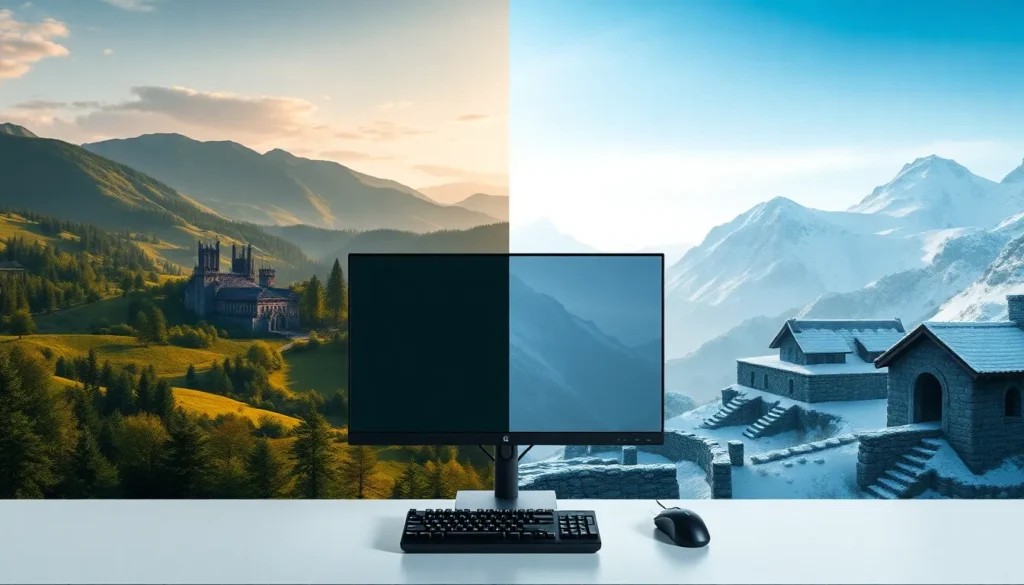

The Oblivion vs Skyrim debate has sparked countless discussions among RPG fans since Skyrim’s 2011 release. Both games represent Bethesda’s Elder Scrolls series at its finest, yet they offer distinctly different experiences. Oblivion brought players to the lush province of Cyrodiil in 2006, while Skyrim transported them to the frozen lands of the Nords five years later. Each game has passionate defenders who swear their favorite is superior.
This comparison breaks down what makes each title unique. Players considering their first Elder Scrolls adventure, or veterans looking to revisit these classics, will find clear answers here. The games differ in combat, exploration, quests, and character building. Understanding these differences helps players choose the right starting point for their journey.
Table of Contents
ToggleKey Takeaways
- Skyrim offers more responsive, action-oriented combat while Oblivion uses a methodical, class-based system with hidden dice-roll mechanics.
- In the Oblivion vs Skyrim world design debate, Skyrim wins for environmental variety with distinct regions, while Oblivion’s Cyrodiil feels more uniform.
- Oblivion delivers superior quest quality, featuring legendary faction storylines like the Dark Brotherhood and more creative side quests.
- Skyrim’s perk system and intuitive skill progression make it more accessible, whereas Oblivion’s class system offers deeper strategic character building.
- New players should start with Skyrim for a smoother introduction, then play Oblivion to experience its standout questlines.
- Both Elder Scrolls games deserve attention—the Oblivion vs Skyrim choice ultimately depends on whether you prioritize polished gameplay or creative quest design.
Gameplay and Combat Systems
The Oblivion vs Skyrim combat comparison reveals significant evolution between titles. Oblivion uses a class-based system where players select major skills at character creation. Combat feels slower and more methodical. Sword swings connect based on dice-roll mechanics hidden beneath the surface. A player might swing directly at an enemy and miss because their blade skill is too low.
Skyrim streamlined this approach considerably. Combat became more action-oriented and responsive. When players swing a sword, it hits. The game removed invisible hit calculations that frustrated many Oblivion players. Skyrim also introduced dual-wielding, letting players mix weapons and spells in creative combinations.
Magic systems differ between titles too. Oblivion allowed players to create custom spells with wild effects. A creative player could craft a spell that launched enemies across rooms. Skyrim removed spell crafting but added shouts, powerful dragon abilities that became iconic to the game. The Oblivion vs Skyrim magic debate often comes down to customization versus spectacle.
Both games feature real-time combat with blocking, power attacks, and stamina management. But, Skyrim’s combat feels more immediate and satisfying to modern players. Oblivion rewards patience and understanding its underlying systems.
World Design and Exploration
World design represents one of the biggest contrasts in the Oblivion vs Skyrim discussion. Cyrodiil in Oblivion features rolling green hills, dense forests, and a generic fantasy aesthetic. The landscape is pleasant but lacks distinctive landmarks. Many players joke that Oblivion’s wilderness looks the same everywhere.
Skyrim’s world feels dramatically different. Snow-capped mountains dominate the horizon. Ancient Nordic ruins dot the landscape. Each hold has its own visual identity. Whiterun’s plains look nothing like the marshes of Morthal or the volcanic terrain near Windhelm. The Oblivion vs Skyrim world comparison often favors Skyrim for this environmental variety.
Dungeon design tells a similar story. Oblivion’s dungeons follow a limited set of templates. Players encounter the same cave layouts repeatedly with minor variations. Ayleid ruins blend together after the first dozen. Skyrim addressed this criticism directly. Its dungeons feature unique layouts, environmental storytelling, and convenient back-exits that loop players to the entrance.
Both games offer hundreds of locations to discover. Oblivion has more guild halls and cities to explore. Skyrim provides greater environmental diversity. The Oblivion vs Skyrim exploration experience depends on whether players prefer quantity or variety.
Story and Quest Quality
Quest design is where Oblivion arguably outshines its successor. The Dark Brotherhood questline in Oblivion remains legendary among Elder Scrolls fans. Players infiltrate a house party and eliminate guests one by one. The Thieves Guild sends players on increasingly elaborate heists. The Mages Guild requires actual magical aptitude to progress.
Skyrim’s faction questlines feel shorter and less creative by comparison. Players become Archmage after casting perhaps a dozen spells. The Companions storyline rushes through its werewolf reveal. Many fans consider Oblivion vs Skyrim quest quality a clear win for the older game.
The main stories differ in scope and execution. Oblivion’s Oblivion Gates, hellish portals spawning across Cyrodiil, create urgency but become repetitive. Players must close dozens of near-identical gates. Skyrim’s dragon attacks feel more dynamic. Each dragon fight plays out differently across the landscape.
Side quests in both games range from memorable to forgettable. Oblivion features bizarre standalone adventures like entering a painted world or solving a murder mystery at a dinner party. Skyrim’s side content often involves clearing dungeons for NPCs. The Oblivion vs Skyrim side quest comparison highlights Oblivion’s creative ambition against Skyrim’s polished consistency.
Character Progression and Skills
Character building differs fundamentally between these titles. Oblivion uses a traditional class system. Players choose seven major skills that determine how they level up. This system creates strategic depth but also notorious problems. Players who level “wrong” face enemies that outscale them. The Oblivion vs Skyrim leveling debate often centers on this punishing design.
Skyrim simplified progression into a more intuitive system. Every skill contributes to character level equally. Players improve skills by using them, swing a sword to improve one-handed, cast spells to improve magic schools. This approach feels natural and removes the anxiety around “efficient” leveling.
The perk system represents Skyrim’s biggest advancement. Each skill tree offers meaningful choices that change gameplay. A stealth archer plays nothing like a two-handed warrior. Oblivion’s character development happens through attribute points and skill numbers. The differences feel less dramatic in practice.
Oblivion offers more skills overall, including Acrobatics and Athletics. Players can jump higher and run faster through practice. Skyrim removed these in favor of fewer, more impactful skill lines. The Oblivion vs Skyrim skill system comparison reveals different design philosophies: depth versus accessibility.
Which Game Should You Play First
New players face a genuine dilemma in the Oblivion vs Skyrim starting point question. Both games work as standalone experiences. Neither requires knowledge of Elder Scrolls lore.
Skyrim makes the stronger first impression for modern players. Its combat feels responsive. Its world looks gorgeous even in 2024. The game teaches its systems gradually without overwhelming new players. Skyrim also has massive mod support that keeps it fresh. Players struggling with dated aspects can install mods to address nearly any complaint.
Oblivion rewards players who appreciate older RPG conventions. Its quest writing surpasses Skyrim in creativity and depth. The character system offers more control for theory-crafters. Players who enjoy figuring out game systems will find more to explore. But, Oblivion’s graphics and combat feel dated. Some players bounce off the game before reaching its best content.
The practical recommendation: start with Skyrim. It provides a smoother introduction to Elder Scrolls gameplay. Players who enjoy Skyrim can then try Oblivion to experience its superior questlines. Going backward from Skyrim to Oblivion proves easier than the reverse. The Oblivion vs Skyrim question doesn’t require choosing one forever, both games deserve attention from RPG fans.


