
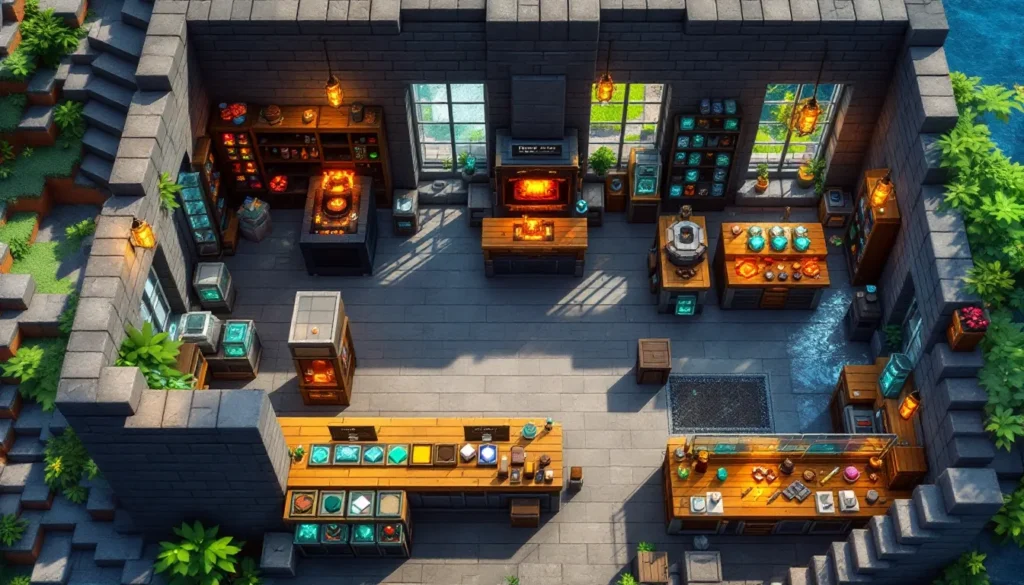

Blacksmiths are one of the most valuable NPCs you’ll encounter in Minecraft, especially if you’re playing with villages or managing a thriving community. Whether you’re a survival player hunting for enchanted gear or a creative builder designing elaborate trading hubs, understanding how blacksmiths work can dramatically improve your efficiency and gameplay. This guide covers everything from locating these essential vendors to building your own blacksmith shop and maximizing their trading potential. If you’ve ever wondered why some players seem to have endless supplies of valuable items while others struggle to find basic trades, the blacksmith is often the answer.
Table of Contents
ToggleKey Takeaways
- Minecraft blacksmiths—including armorers, toolsmiths, and weaponsmiths—provide reliable access to enchanted gear and high-tier equipment that would take hours to craft or find through mining.
- Every naturally generated village contains at least one blacksmith structure, identifiable by distinctive architecture; plains villages are the most accessible and reliable for locating them.
- Emerald farming through low-tier item production (sugarcane, melons, composting) is the bottleneck to maximizing blacksmith trades and achieving exponential scaling in your economy.
- Building a custom blacksmith shop with proper job site blocks (blast furnace, smithing table, grindstone), lighting, and thematic decorations gives you complete control over your trading infrastructure.
- Combining villager breeding, profession engineering with job site blocks, and automated farms creates a closed-loop economy where basic materials automatically convert into endgame gear.
What Is a Minecraft Blacksmith?
A blacksmith in Minecraft is a specialized villager profession that emerged from the armorer, toolsmith, and weaponsmith roles introduced in the Village & Pillage update. This NPC focuses on trading valuable equipment, rare materials, and tools that would otherwise take significant time to craft or find. Blacksmiths typically stock enchanted diamond gear, iron tools, and other high-tier items that can accelerate your progression significantly.
The blacksmith profession isn’t just about convenience, it’s a cornerstone of efficient survival gameplay. Unlike mining for hours to gather diamonds or hunting through dungeons for enchanted loot, trading with a blacksmith lets you acquire top-tier equipment reliably. They accept emeralds as currency and trade items that range from basic tools to fully enchanted armor pieces. Understanding what each variant trades makes the difference between a moderately useful NPC and a game-changing asset.
When the game updated village mechanics, blacksmiths became even more accessible to players willing to trade strategically. Their inventory varies depending on the specific profession variation (armorer, toolsmith, weaponsmith), each filling different roles in your survival strategy.
Locating Blacksmith Structures
Finding a blacksmith requires knowing where to look and what to expect. Villages generate naturally in specific biomes, and each has a guaranteed blacksmith structure if you know what to look for. The most efficient approach combines biome knowledge with systematic searching.
Finding Blacksmiths in Villages
Blacksmiths spawn in designated buildings within naturally generated villages. Every village contains at least one blacksmith structure, identifiable by specific architectural features. In Java Edition, the blacksmith building typically contains a smoker workstation and loot chests filled with valuable items. The structure itself is usually one of the larger buildings in the village, often featuring a furnace or cooking setup as a visual marker.
The fastest way to locate a blacksmith is to head toward the village center and look for the structure that stands out from standard houses. Villages always spawn with the same profession buildings in the same patterns, so once you identify the layout, finding the blacksmith becomes straightforward. The blacksmith’s workshop usually connects to the village layout in a central or semi-central location, making it a natural gathering point.
If you’re playing on Bedrock Edition (PS5, Xbox, Nintendo Switch, or Windows 10/11), the mechanics remain similar but the building designs differ slightly. The blacksmith’s workstation is always visible from the building exterior, making identification even easier. Priority one: find any village. Priority two: locate the distinctive blacksmith building. Priority three: initiate trades.
Blacksmith Locations by Biome
Villages generate in specific biomes, and the blacksmith’s presence depends on the village itself, not the surrounding terrain. Plains villages are the most common and reliable, if you find a village in a plains biome, a blacksmith is guaranteed. These villages feature open layouts that make finding the blacksmith structure intuitive.
Desert villages also contain blacksmiths but feature sandstone architecture instead of wood and stone. The blacksmith building blends more seamlessly with the desert landscape, so you need to examine building structures more carefully. Taiga villages contain blacksmiths with snowy aesthetic variations. Savanna villages follow similar rules, with acacia wood replacing traditional materials.
Snowy villages are less common but exist in ice spikes and snowy plains biomes. They contain functioning blacksmiths even though the harsh environment. The rarest villages appear in jungle biomes, featuring unique architectural styles but still housing a guaranteed blacksmith. Understand your biome types, and you’ll know where villages can spawn. Once you find the village, the blacksmith is simply the largest or most distinctive structure within it.
Trading with Blacksmiths: Complete Guide
Blacksmith trading is straightforward but requires understanding the specific inventory of each profession variant. Java Edition and Bedrock Edition have slightly different offerings, and knowing the exact trades maximizes your emerald spending.
What Items Blacksmiths Buy and Sell
Armorers primarily trade armor sets and materials. They sell iron, diamond, and netherite armor pieces, often with enchantments like Unbreaking or Protection IV. In exchange, they accept emeralds and specific item types including iron ingots and diamonds. A single armorer can supply your entire team’s armor needs if you generate enough emeralds through trading chains.
Toolsmiths specialize in tools and utility items. They sell enchanted diamond and iron pickaxes, axes, hoes, and shovels. Tools from toolsmiths frequently include Efficiency V on pickaxes or Fortune III on shovels, making them invaluable for mining expeditions. Toolsmiths accept coal, iron ingots, and emeralds in various quantities.
Weaponsmiths trade combat items and enchanted weapons. They sell enchanted diamond swords, iron swords, and sometimes axes with properties like Sharpness IV or Knockback II. These are critical for progression in survival mode when you lack the enchanting materials to create equivalent weapons yourself. Weaponsmiths accept iron ingots, coal, and emeralds.
The trading mechanics follow a simple pattern: lower-tier trades give you emeralds for common items (coal for iron, for example), while higher-tier trades consume emeralds to receive rare, often enchanted items. First-time trades offer better rates, so resetting villagers and creating multiple blacksmiths can increase your overall value extraction. Each profession handles different materials, so having all three variants ensures coverage across your resource needs.
Maximizing Profit and Efficiency
Emerald acquisition is the bottleneck in blacksmith trading. The players who master emerald farming see exponential returns on their blacksmith investments. Sustainable emerald sources include farming low-demand items like paper from sugarcane, melons and pumpkins from automated farms, or composting agricultural byproducts.
Cleric villagers offer a critical advantage: they buy redstone, glowstone, and other items for emeralds at reasonable rates. Farming these materials and selling to clerics funnels emeralds into your blacksmith trading system. Librarians add another dimension by trading enchanted books for emeralds, allowing you to create custom-enchanted gear before trading with blacksmiths.
The meta-efficient strategy involves:
- Create an emerald farm using low-tier item production (composting, sugarcane, cocoa beans)
- Trade low-tier items to farmers or librarians for initial emerald accumulation
- Convert emeralds into blacksmith gear strategically based on immediate needs
- Use discounts from repeated trades to maximize each emerald’s value
Trade timing matters. If you know you’ll need enchanted diamond pickaxes within the next play session, prioritize toolsmith trades. If combat dominates your current phase, weaponsmith trades take priority. Don’t waste emeralds on items you’ll replace within an hour, plan your acquisition strategy around your survival roadmap.
Bedrock Edition trading differs slightly from Java in pricing and item availability. Always verify exact trades by testing with a single villager before committing massive resources to a particular profession. Some communities document village trading data on sites like Game Rant where you can find verified trading charts for your specific game version.
Building Your Own Blacksmith Shop
Building a custom blacksmith shop serves both aesthetic and functional purposes. A well-designed shop attracts villagers into professions you need while creating a visually appealing trading hub.
Essential Design Elements and Layout
The foundation of any blacksmith shop is the job site block. For armorers, it’s a blast furnace. For toolsmiths, it’s a smithing table. For weaponsmiths, it’s a grindstone. These blocks determine the profession, so placement is critical. Position the job site block in a central, visible location within your shop structure. Villagers seek out their assigned profession block, so accessibility matters.
The building itself should include:
- Entrance and pathways wide enough for player movement without obstruction
- Trading counter positioned to separate the blacksmith area from public space
- Storage integration for organizing materials and finished goods
- Sufficient space for multiple villagers of the same profession if you plan on duplicating them
A typical blacksmith shop measures 7×7 blocks at minimum but benefits from 10×10 for comfortable navigation. Height should accommodate player movement plus some vertical space for decoration. Open-concept layouts work better than enclosed rooms, players need easy access to villagers, and tight corridors create navigation headaches.
Light level management prevents mob spawning and keeps the area safe. Place lanterns, soul lanterns, or other light sources throughout the shop. Dark shops attract hostile mobs, forcing constant vigilance during trading sessions. Minimum light level of 11 keeps the area secure.
Decorations and Workstations
Decorations distinguish your blacksmith shop from generic trading stations. Use thematic blocks that match the profession. Armorers benefit from anvils, armor stands with displayed gear, and metal-themed blocks like dark oak stairs or blackstone. Weaponsmiths look appropriate near sword racks (item frames holding enchanted weapons) and stone or blackstone walls.
Workstations don’t need to be purely functional. Place the job site block visibly but surround it with thematic elements. An armorer with an anvil nearby creates logical flow. A weaponsmith adjacent to grindstone makes sense. These small details transform a trading station into an immersive location.
Consider adding:
- Weapon displays (item frames on walls showing quality gear)
- Material storage organized by type (coal, iron ingots, diamonds)
- Seating areas (stairs or slabs for aesthetic sitting)
- Roofing and walls that protect from weather and create defined space
The beauty of building your own blacksmith shop is control. You design exactly what you need, where you need it. Unlike discovering a village blacksmith constrained by generation rules, your custom shop perfectly integrates into your base infrastructure.
Advanced Blacksmith Strategies
Once you understand basic blacksmith mechanics, advanced players optimize profession mechanics and carry out automation to achieve exponential scaling.
Profession Mechanics and Job Site Blocks
A fundamental mechanic: unemployed villagers seek out job site blocks matching their profession. When you place a smithing table, any unemployed villager within range who hasn’t locked onto a profession becomes a toolsmith. This creates opportunities for profession engineering. If you place multiple job site blocks, unemployed villagers randomly select one, but the first one they touch locks them in.
Villager reroll mechanics allow resetting trades if you dislike a profession’s initial offerings. Remove the job site block, wait a few seconds, then replace it. The villager searches for the block again and attempts to lock in, but if no compatible block exists, they remain unemployed. This gives you unlimited profession attempts without permanently wasting a villager. Some players execute dozens of rerolls to get ideal first-trade rates.
Trade leveling changes villager prices and inventory over time. Each successful trade advances the villager’s experience. At certain thresholds, new trades unlock and early trades discount. A master-level blacksmith offers dramatically better prices than a novice. This means investing time into trading with a single villager yields better returns than constantly switching targets.
Villager breeding allows creating custom profession populations. Provide beds and food (bread, potatoes, or carrots), and villagers produce offspring. The new generation can be assigned to any unlocked profession, letting you build an army of specialized traders. This is where exponential scaling begins, instead of one blacksmith, you have five, each offering unique trades.
Farming and Automation Tips
Sustainable emerald production requires automation. Sugarcane farms fed to an automatic system produce emeralds through librarian trades. Cactus farms accomplish similar goals. Cocoa beans from jungle wood create a reliable emerald source. The key is zero-input automation, farms that function without player interaction.
Hopper systems transport materials to villagers efficiently. A single hopper connected to a composter (for organic materials) flows directly into a librarian’s trading interface. This turns raw farm output into emeralds passively. Scale these systems and your emerald production becomes exponential.
Railway infrastructure connects farming areas to blacksmith hubs. Minecarts with hoppers transport materials efficiently, reducing travel time and consolidating operations. An advanced player might have five separate farms feeding into a central trading station, creating a closed-loop economy.
The ultimate strategy combines villager duplication (breeding), profession engineering (job site block placement), and automation farming. Build farms that produce emeralds, breed villagers for essential professions, and carry out trading chains that convert basic materials into endgame gear automatically. This transforms blacksmiths from one-off trading partners into the cornerstone of your entire operation.
Blacksmith Comparisons: Toolsmith vs. Weaponsmith
While both toolsmith and weaponsmith fall under the blacksmith umbrella, they serve distinct purposes. Understanding the differences helps you prioritize which professions to maintain.
Toolsmith focuses on pickaxes, axes, hoes, and shovels. Their primary value is pickaxes with Efficiency V and Unbreaking III, which dramatically accelerate mining. A fortune-enchanted shovel from a toolsmith lets you collect 4-9 blocks of ore instead of 1, making mining exponentially faster. For players heavy on mining and building, toolsmiths are non-negotiable. They also trade enchanted axes with Efficiency for wood gathering.
Weaponsmith specializes in combat items. Enchanted diamond swords with Sharpness IV and Knockback II replace hours of XP grinding at an enchanting table. Weaponsmiths also trade enchanted axes that work for both combat and tree-felling. For players engaging in combat frequently (raiding, mob grinding, PvP), weaponsmiths provide immediate power progression.
The choice depends on playstyle. A player focused on mega-builds and mining prefers toolsmiths. A player preparing for the Nether and Wither fights prioritizes weaponsmiths. The ideal scenario involves both, maintaining multiple blacksmith variants ensures all situations are covered. But, if forced to choose one, toolsmith usually wins because mining is the foundation of all survival progression. Better pickaxes accelerate everything else.
Armorers remain essential regardless of the above comparison. They supply protective gear that no grinding method easily replicates. Include all three professions in a developed base for complete self-sufficiency. References on GameSpot and community databases detail exact trades for each variant, letting you verify which profession suits your current needs.
Conclusion
Mastering the blacksmith mechanic transforms Minecraft from a grinding simulator into a strategic resource management game. Whether you’re discovering your first village blacksmith or engineering a multi-villager trading empire, the principles remain consistent: understand profession mechanics, optimize emerald generation, and build infrastructure that scales automatically.
The journey from locating your first blacksmith to maintaining a thriving trading hub represents a significant progression milestone. New players gain an immediate resource boost, while veterans leverage blacksmiths to create closed-loop economies where basic materials transform into endgame gear with minimal intervention. The difference between struggling to gather enchanted equipment and having unlimited access comes down to understanding and implementing the systems outlined here.
Your blacksmith strategy will evolve as your base grows and your priorities shift. Early game blacksmiths cover immediate equipment gaps. Late-game blacksmiths automate progression entirely. The flexibility of the profession system lets you adapt to whatever playstyle suits you. Start small, locate a village blacksmith, execute a few trades, then expand into custom builds and automation as your resources allow. The community continues discovering new optimization techniques, so stay engaged with players sharing their latest discoveries on platforms like Nexus Mods, where tool creators build utilities specifically for tracking and optimizing villager trading chains.


