
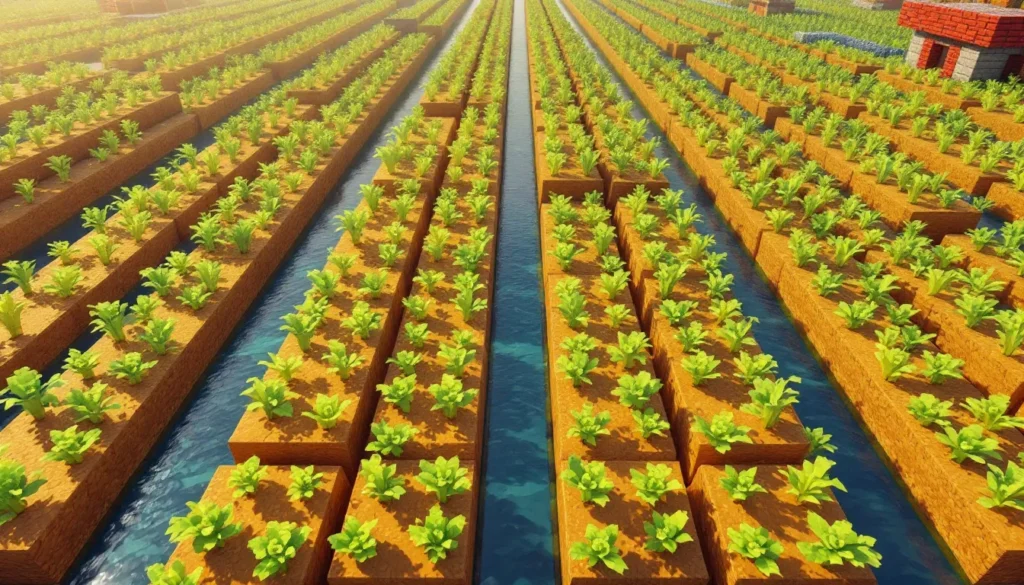

Potatoes might not be the flashiest crop in Minecraft, but they’re one of the most reliable food sources and one of the few plants with multiple uses beyond simple sustenance. Whether you’re setting up a survival world, preparing for a long mining expedition, or optimizing your farm for maximum efficiency, understanding how to cultivate and use potatoes can make a significant difference in your gameplay. In 2026, with ongoing updates and refinements to farming mechanics, potatoes remain a cornerstone of mid-to-late game progression. This guide breaks down everything you need to know about Minecraft potatoes, from locating your first crop to automating massive harvests, brewing applications, and platform-specific quirks.
Table of Contents
ToggleKey Takeaways
- Minecraft potatoes are a reliable early-game food source and dual-purpose crop that can be harvested from village farms or grown on tilled farmland adjacent to water for optimal growth.
- Automated potato farms using observer blocks, pistons, and redstone can yield 5,000+ raw potatoes per hour and serve as powerful XP grinding engines for late-game progression.
- Baked potatoes restore 10 times more saturation (6.0) than raw potatoes (0.6), making them significantly more efficient for sustained survival despite requiring furnace smelting.
- A basic Minecraft potato farm layout requires water channels every 4 blocks, light level 15, and optimal redstone automation for zero-waste harvesting and immediate replanting.
- While poisonous potatoes drop at only 2% chance and lack vanilla brewing uses, standard potatoes sustain extended mining expeditions and free inventory space when farmed at scale.
- Potatoes function identically across Java Edition and Bedrock Edition, making them the most reliable universal food source for cross-platform Minecraft servers and multiplayer worlds.
What Are Potatoes in Minecraft?
Potatoes are a stackable food item and crop block that appeared in Minecraft Java Edition 1.4 (Pretty Scary Update). They function as both a reliable food source and a farmable resource with multiple applications. When harvested from potato plants, they yield 1–4 raw potatoes per block, depending on the crop’s growth stage.
In Minecraft’s current state, potatoes serve three primary roles: sustenance (when baked), component for potion brewing (when poisonous), and XP farming in automated systems. Unlike wheat, which requires crafting into bread, potatoes can be eaten raw, though they restore less hunger and are less efficient than baked variants. The Poisonous Potato, a rare drop from harvested potato plants (roughly 2% chance), introduces brewing applications unavailable with standard potatoes.
Potatoes grow through eight distinct stages, visible by their height and plant maturity. Fully mature potato plants stand taller and display darker foliage, making them easy to identify in large farm plots. Growth speed depends on light level (minimum 9, optimal 15), hydration (adjacent water within 4 blocks horizontally), and whether the soil is tilled farmland. Unlike some crops, potatoes don’t require a specific biome to thrive, making them universally farmable across all terrain types.
How to Find and Farm Potatoes
Locating Potatoes in the Wild
Your first potatoes don’t come from crafting, they come from exploration. Potatoes spawn naturally in Village farms, typically located in plains, savanna, and taiga biomes. These blocks generate when a village is created, offering an early, zero-risk source for your first seeds.
To secure potatoes from a village farm:
- Locate a village using exploration or by traveling to plains biomes (villages are more common here).
- Identify the farmland plots: look for tilled soil with crops of varying heights.
- Break fully grown potato plants (stage 7–8) with your hand or any tool. This yields 1–4 raw potatoes and typically 0–2 seeds (though potatoes drop seeds less frequently than wheat).
- Gather at least 2–3 potatoes to begin farming: replant them immediately on tilled farmland near water.
If villages aren’t nearby, raiding Shipwrecks in oceans occasionally yields potatoes in loot chests (especially in Java Edition). But, village farms remain the most reliable early-game source. Once you’ve secured your initial stock, you can establish your own farm and never depend on random spawns again.
Potatoes require farmland (created by using a hoe on dirt or grass blocks) and water for optimal growth. Farmland automatically moistens when water is adjacent, accelerating growth significantly. Without water, potato crops take dramatically longer to mature and may fail entirely.
Setting Up an Automated Potato Farm
Automation is where potato farming becomes truly efficient. A basic automated setup uses observer blocks, redstone dust, and pistons to detect crop maturity and trigger harvests without manual intervention.
Here’s a simple automated potato farm layout:
- Farmland Grid: Create rows of farmland with water channels every 4 blocks (water hydrates up to 4 blocks in any direction). A 9×9 plot with a centered water channel yields approximately 96 plantable spaces per setup.
- Detection Layer: Place observer blocks facing the sides of potato plants. Observers detect block state changes (growth stage progression) and emit a redstone pulse when a crop reaches full maturity.
- Harvesting Mechanism: Connect observers to sticky pistons positioned above the crops. When observers detect maturity, they trigger pistons to break the plants, sending drops into collection channels.
- Item Transport: Route drops through hoppers connected to chest or barrel storage. Use water streams to guide items toward hoppers if pistons aren’t aligned perfectly.
- Replanting: Some advanced farms automate replanting using dispenser blocks fed by redstone clocks, eliminating the need for manual seed placement entirely.
A well-designed potato farm can yield 5,000+ raw potatoes per hour in full automation, making it an unmatched XP and food source for late-game players. The investment in redstone components pays off quickly, especially if you’re preparing for major projects like fighting the Ender Dragon or raiding End Cities.
Potato Recipes and Brewing Guide
Baked Potatoes and Their Benefits
Baked potatoes are the refined version of raw potatoes, offering superior nutrition and stackability. To craft baked potatoes, simply smelt raw potatoes in a furnace, blast furnace, or smoker. A single raw potato smelts into one baked potato with no additional materials required.
Nutrition comparison:
- Raw Potato: Restores 0.5 hunger (1/2 shanks), +0.6 saturation
- Baked Potato: Restores 5 hunger (2.5 shanks), +6.0 saturation
The baked version restores 10 times the saturation, making it dramatically more efficient for long-term survival. A stack of 64 baked potatoes sustains a player far longer than the same quantity raw. For serious farming operations, having a furnace setup adjacent to your potato storage ensures a steady supply of prepared food without inventory clutter.
Baked potatoes are inferior to bread (6 hunger, 7.2 saturation) and steaks/chops (8 hunger, 12.8 saturation) in pure efficiency, but they’re significantly easier to mass-produce, requiring zero additional crafting steps beyond smelting. For players focused on automation, baked potatoes represent the optimal effort-to-reward ratio.
Poisonous Potatoes: What You Need to Know
Poisonous potatoes are a unique drop (2% chance) from harvested potato plants, uneatable by players and useless as direct food. But, they hold one critical role: they’re a component for brewing potions in specific applications. When consumed (which is impossible), they would inflict Poison status effect for 4.5 seconds on normal difficulty, but players cannot eat them directly.
Even though their name, poisonous potatoes have limited direct utility. They cannot be baked, smelted, or crafted into other items. But, they occasionally appear in niche redstone contraptions or plugin-based servers with custom recipes. For standard vanilla survival, poisonous potatoes are essentially junk drops, collect them if you’re being thorough, but don’t prioritize them over raw potatoes.
One context where poisonous potatoes matter: if you’re running a farm focused on XP gain (harvesting for saturation and XP rather than food efficiency), poisonous potatoes don’t affect your output, but they do clutter inventory. Set up your collection system to funnel them into a separate bin or void them entirely.
Using Potatoes for Potion Brewing
Contrary to assumptions, standard potatoes and poisonous potatoes aren’t direct potion ingredients, they’re not used in cauldrons or brewing stands. This is a common misconception among new players. Potatoes entered the game without built-in potion integration, and that design remains in 2026.
But, potatoes connect indirectly to potion brewing through the broader farming ecosystem. Advanced players farm massive potato quantities to sustain themselves during mining expeditions dedicated to gathering potion ingredients (like Nether wart, which requires Nether exploration and defensive farming). By outsourcing food to automated potato farms, players free up inventory and focus on ingredient collection.
In modded Minecraft (especially through platforms like Nexus Mods), several mods rebalance potatoes to include brewing recipes or food enhancements. The most popular mods integrate potatoes into alchemical crafting chains, making them valuable beyond vanilla limitations. If you’re interested in expanded potato functionality, exploring community mods opens far more potential.
Potatoes as Food and XP Source
Potatoes serve dual purposes: feeding players and generating XP, the latter being their true late-game value. Every raw potato harvested yields 3 XP (for breaking the block), and every cooked item (like baked potatoes) grants additional XP when smelted. A fully automated potato farm becomes an XP grinder, capable of pushing players toward Level 30+ in hours rather than days of conventional grinding.
For food efficiency, a single baked potato lasts approximately 7.2 hunger shanks worth of saturation, meaning a stack of 64 can sustain a player through extended mining expeditions or PvP sessions. Compared to bread (6 hunger, 7.2 saturation per unit, but requires wheat + crafting), potatoes save significant crafting time and yield comparable nutrition.
Hunger depletion in Minecraft depends on activity. Sprinting, jumping, or taking damage drains hunger fastest. A player engaging in intense combat burns 4+ hunger points per second, making food access critical. Baked potatoes allow players to maintain health and hunger bars simultaneously, especially when paired with a consistent harvest pipeline.
For XP farming specifically, the strategy involves:
- Setting up an idle farm that continues harvesting even when the player is AFK (using redstone automation).
- Collecting harvested potatoes into hoppers and chest systems.
- Creating a smelting room with multiple furnaces or smokers running in parallel, cooking potatoes into baked variants.
- Using an XP farm where players stand on furnaces, allowing smelting XP to apply to their character.
This setup turns potatoes into pure XP production. A mid-sized farm running continuously can generate 500+ XP per minute when paired with efficient smelting, representing one of the fastest non-combat XP sources in the game. Experienced players prioritize potato farms early to accelerate progression toward Mending enchantments and Netherite armor preparation.
Optimizing Potato Harvests for Maximum Efficiency
Advanced Farming Techniques and Redstone Automation
Optimization begins with understanding crop growth mechanics. Potatoes reach full maturity in 8 stages, with growth speed influenced by random ticks. Random tick speed in-game defaults to 3, meaning each chunk is evaluated three times per game tick. Increasing random tick speed (using /gamerule randomTickSpeed 6) doubles growth speed, but consumes more resources server-wide.
Water placement dramatically impacts farm design. Unlike soil hydration (which is binary: hydrated or not), water itself acts as a growth catalyst. Hydrated farmland surrounded by water experiences faster growth than farmland on the edge of hydration zones. A potato block adjacent to water grows faster than one 4 blocks away, even if both are technically hydrated.
For a 99×99 chunk farm optimized for growth speed:
- Single-row water channels every 4 blocks horizontally and vertically (most efficient use of space).
- No diagonal water: water hydrates in cardinal directions only (north, south, east, west).
- Light source coverage at Y-level 15 (optimal light), either from torches (every 12 blocks) or bottom-placed light blocks (less lag than suspended torches).
- Replanting automation using dispensers and redstone clocks to place seeds immediately after harvest, eliminating empty blocks.
Advanced players use tree farms interspersed with potato plots to maintain consistency. Growing trees (oak, birch, spruce) alongside potatoes diversifies XP sources and prevents boredom during long AFK sessions.
Redstone optimization reduces lag significantly. Single-tick observers (detecting state changes instantaneously) are preferable to longer timing chains. Repeaters set to 1-tick delays connected to piston arrays harvest crops the moment maturity is detected, ensuring zero waste and minimal block updates.
A key optimization: Separate harvesting and smelting into different chunks. If furnaces operate in the same chunk as the farm, both draw server resources simultaneously, causing TPS (ticks per second) lag. Distance the smelting operation at least 200 blocks away, allowing chunk unloading to manage lag more effectively.
Best Practices for Year-Round Potato Production
Consistent production requires fail-safes. The most common issue: forgetting to replant after manual harvests, leaving sections fallow for entire Minecraft days. Automated farms solve this, but manual players benefit from these practices:
- Maintain separate storage bins for seeds and harvestable potatoes, ensuring you never accidentally eat your seed stock.
- Designate harvest rotation zones within your farm: harvest one section every 10 minutes (game time) to ensure a steady yield rather than boom-bust cycles.
- Keep backup seeds stored in an Ender chest, allowing recovery from accidental seed loss during disasters.
- Monitor light sources after major updates (trees growing nearby can shade crops), which silently reduces growth speed without obvious visual cues.
For multiplayer servers or high-traffic worlds, consider building your potato farm in a remote chunk claimed exclusively for you. This prevents other players’ activities from triggering chunk loads that might reset growth timings. Top Minecraft Mods, Seeds, often include server-specific farm recommendations based on lag profiles and difficulty settings.
Crop cycling prevents soil exhaustion (not a mechanic in vanilla Minecraft, but a roleplay best practice). Every few in-game weeks, harvest and replant specific sections to simulate crop rotation, improving immersion in survival worlds focused on realism.
For maximum efficiency, automate smelting with hoppers pulling from chests directly into furnaces, then output hoppers feeding a collection system. This creates a fully closed-loop operation requiring zero player intervention beyond initial setup.
Potatoes in Different Minecraft Editions
Potatoes function identically across Java Edition and Bedrock Edition in their core mechanics, growth, harvesting, and crafting, but differ subtly in farming automation and biome generation.
Java Edition benefits from superior redstone logic, allowing for more compact and efficient observer-based farms. The observer block’s instantaneous response to crop maturity makes Java the preferred platform for optimization-focused players. Also, Java’s random tick system is more predictable, making growth rates easier to calculate and optimize. Village generation patterns also differ: Java villages are more uniformly distributed, making potato farm startup faster.
Bedrock Edition (available on Xbox, PlayStation, Nintendo Switch, Windows 10/11, and mobile) uses simplified redstone, making observer farms trickier to carry out at scale. But, Bedrock’s comparator and repeater mechanics have been improved in recent updates, narrowing the gap. Comparators in Bedrock directly measure crop growth stages, enabling alternative automation approaches unavailable in Java. For console players, this means potato farms are viable but may require more creative redstone design.
Pocket Edition/Mobile versions of Bedrock Edition on iOS and Android support potato farming with identical mechanics but face performance limitations on lower-end devices. Automated farms run slower on mobile, so manual harvesting or smaller automated plots are recommended.
Legacy Console Editions (PS3, Xbox 360, Wii U) include potatoes but with older farming mechanics and significantly smaller world sizes, limiting farm viability. These editions are no longer actively updated, so optimization advice doesn’t apply.
For cross-platform worlds or Realms (Microsoft’s official multiplayer service), potatoes farm identically across Java and Bedrock, making them the ideal universal food source for mixed-platform groups. If your server hosts both Java and Bedrock players simultaneously (via third-party plugins like Geyser), potato farms become critical infrastructure for unified survival progression.
Recent 2025–2026 updates have standardized farming mechanics further. Minecraft: The Ultimate Guide covers platform-specific updates in detail, but the takeaway is simple: potatoes work reliably everywhere, making them the safest food investment across all editions.
Conclusion
Potatoes represent one of Minecraft’s most underrated assets. While they lack the glamour of rare enchantments or exotic materials, they’re foundational to long-term survival and late-game progression. From securing your first seeds in village farms to automating massive harvests that sustain extended mining expeditions and generate thousands of XP, potatoes evolve alongside your Minecraft journey.
The key to mastery lies in treating potato farming as infrastructure, not a side activity. A 30-minute investment in setting up basic automation, observer blocks, pistons, hoppers, and water channels, pays dividends for the rest of your playthrough. You’ll never worry about food again, freeing mental resources for complex projects like building massive structures or preparing for combat challenges.
Whether you’re optimizing for pure efficiency, pursuing creative builds, or grinding XP for endgame enchantments, potatoes deliver consistent value across all playstyles and editions. Start with village farms, upgrade to simple automation, and scale into industrial operations as your redstone skills improve. By understanding the mechanics covered in this guide, growth stages, hydration, automation triggers, and cross-platform variations, you’ll extract maximum yield from every planted crop.
For broader inspiration on farming innovations and building techniques, exploring Creative Minecraft Ideas to Spark Your Next Adventure – WARP Graphics reveals how experienced players integrate potatoes into larger farm complexes and economy systems. The foundation you build with potatoes supports everything else that follows.


