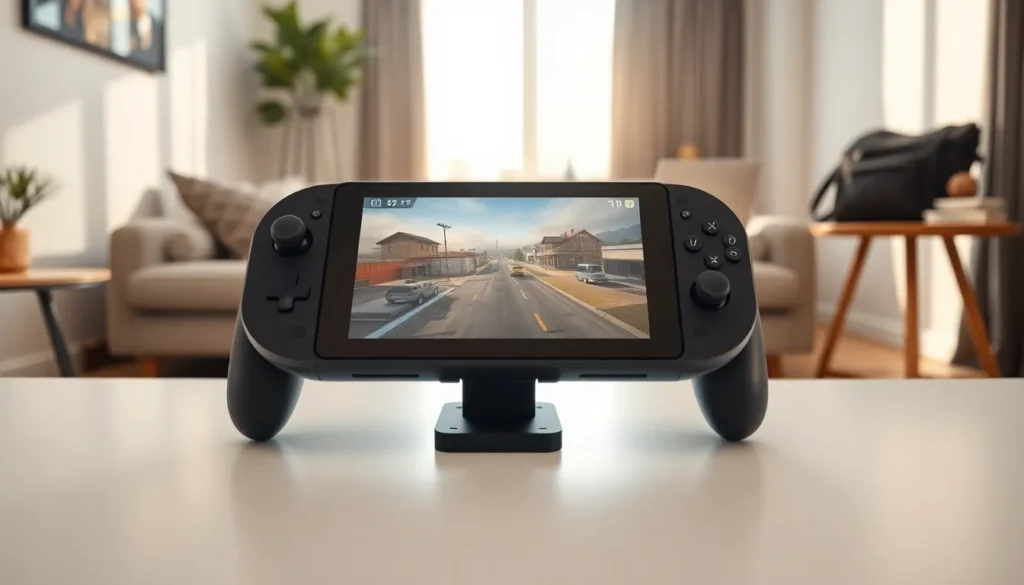

The Steam Deck is Valve’s handheld gaming PC that lets players enjoy their Steam library anywhere. Since its launch in February 2022, the Steam Deck has changed how people think about portable gaming. It combines the power of a gaming PC with the convenience of a handheld console.
This device runs on a custom AMD APU and uses SteamOS, a Linux-based operating system. Players can access thousands of games from their existing Steam library without buying titles again. The Steam Deck supports full PC gaming on the go, including AAA titles, indie games, and even emulators.
This guide covers everything about the Steam Deck. It explains the hardware specs, how the device works, available models, game compatibility, and who benefits most from owning one.
Key Takeaways
- The Steam Deck is Valve’s handheld gaming PC that lets you play your entire Steam library on the go without repurchasing games.
- It runs on a custom AMD APU with Zen 2 CPU and RDNA 2 graphics, delivering mid-range PC performance in a portable form factor.
- SteamOS uses Proton compatibility to run most Windows games on Linux, with over 10,000 titles now Verified or Playable.
- The Steam Deck OLED model ($549–$649) offers a better display, longer battery life, and WiFi 6E compared to the discontinued LCD versions.
- Beyond Steam games, users can install emulators, other game launchers, and even stream games through cloud gaming services.
- The Steam Deck is ideal for PC gamers with existing libraries, travelers, retro gaming fans, and anyone seeking portable PC gaming flexibility.
Steam Deck Hardware and Specifications
The Steam Deck packs serious hardware into a portable form factor. At its core sits a custom AMD APU that combines a Zen 2 CPU with RDNA 2 graphics. This chip delivers performance comparable to a mid-range gaming PC from a few years ago.
The CPU features four cores and eight threads running at 2.4-3.5 GHz. The GPU provides 8 compute units at up to 1.6 GHz. Together, they push out enough power to run most modern games at 720p or 800p with decent frame rates.
The Steam Deck includes 16GB of LPDDR5 RAM running at 5500 MT/s. This memory bandwidth helps the integrated graphics perform better than similar chips in other devices. Storage options vary by model, ranging from 64GB eMMC to 512GB NVMe SSD.
The 7-inch IPS LCD screen displays at 1280×800 resolution with a 60Hz refresh rate. It reaches up to 400 nits of brightness and supports touch input. The Steam Deck OLED model upgrades this to a 7.4-inch HDR OLED panel with a 90Hz refresh rate.
Battery life depends heavily on the game. Light games and indie titles can run for 6-8 hours. Demanding AAA games drain the 40Whr battery in about 2-3 hours. The OLED version bumps this to 50Whr for longer sessions.
The device weighs approximately 669 grams. It measures 298mm x 117mm x 49mm, making it larger than a Nintendo Switch but still pocketable in a bag. Cooling comes from a custom fan and heat pipe system that keeps temperatures manageable during intense gaming.
How the Steam Deck Works
The Steam Deck runs SteamOS 3.0, a Linux-based operating system built on Arch Linux. Valve designed this OS specifically for gaming on the Steam Deck. It boots directly into a console-like interface called Gaming Mode.
Gaming Mode presents games in a controller-friendly format. Players browse their library, adjust settings, and launch games without touching a keyboard. The interface resembles Big Picture Mode on regular Steam but runs smoother.
Steam Deck uses Proton to run Windows games on Linux. Proton is a compatibility layer that translates Windows game code to work on SteamOS. Valve updates Proton regularly to improve game support. Most Steam games now work on the Steam Deck thanks to this technology.
Players can switch to Desktop Mode for a full PC experience. This mode provides a standard Linux desktop with a web browser, file manager, and access to other applications. Users can install non-Steam games, emulators, or productivity software here.
The Steam Deck syncs with Steam Cloud automatically. Save files transfer between the handheld and any gaming PC linked to the same account. A player can start a game at home on their desktop, then continue on the Steam Deck during a commute.
Controls include two thumbsticks, a D-pad, ABXY buttons, four back buttons, and two trackpads. The trackpads provide mouse-like precision for games designed with keyboard and mouse in mind. Gyroscope controls add another input option for aiming in shooters.
Connectivity includes WiFi 5 (or WiFi 6E on OLED models), Bluetooth 5.0, and a USB-C port. Players can connect external controllers, keyboards, monitors, or docking stations. The Steam Deck works as a full desktop replacement when docked.
Steam Deck Models and Pricing
Valve offers several Steam Deck models at different price points. The lineup has changed since launch, with the OLED version now taking center stage.
The original Steam Deck LCD came in three variants. The base model had 64GB eMMC storage and cost $399. The mid-tier offered 256GB NVMe SSD storage with a faster loading experience for $529. The top LCD model included 512GB NVMe storage and an anti-glare screen for $649.
Valve discontinued the LCD models in late 2024. The Steam Deck OLED replaced them as the primary option. This version starts at $549 for 512GB storage and goes up to $649 for 1TB storage.
The OLED upgrade brings significant improvements beyond the screen. Battery capacity increased from 40Whr to 50Whr. WiFi upgraded from WiFi 5 to WiFi 6E. The APU uses a slightly smaller fabrication process for better power efficiency. Download speeds improved with faster storage controllers.
All Steam Deck models include a carrying case. Higher-tier models add extras like exclusive Steam Community profile bundles and virtual keyboard themes.
Used LCD models remain available through resale markets at lower prices. Budget-conscious buyers can find good deals on these older units. They still receive software updates and play the same games as OLED models.
Valve sells the Steam Deck through its official store in supported regions. Availability has improved since the initial launch shortages. Most orders now ship within days rather than months.
Game Compatibility and Library Access
The Steam Deck plays games from a player’s existing Steam library. There’s no need to repurchase games already owned on Steam. This instant access to potentially thousands of titles gives the Steam Deck a huge software advantage.
Valve created the Deck Verified program to show compatibility status. Games fall into four categories: Verified, Playable, Unsupported, and Unknown. Verified games work perfectly with default settings. Playable games function but might need some tweaking.
Over 10,000 games now carry Verified or Playable status. Popular titles like Elden Ring, Baldur’s Gate 3, Hades, and Stardew Valley run great. Most indie games work without issues. Many AAA releases receive day-one Steam Deck support.
Some games don’t work on Steam Deck. Titles with anti-cheat software that doesn’t support Linux cause the most problems. Games like Destiny 2 and PUBG fall into this category. But, many developers have updated their anti-cheat to work with Proton.
The Steam Deck also runs non-Steam software. Players install other game launchers like GOG Galaxy, Epic Games Store, or Battle.net through Desktop Mode. Emulators open access to retro gaming libraries. Applications like Discord, web browsers, and media players work fine too.
Performance varies by game. Indie games and older titles often hit 60fps at native resolution. Newer AAA games might need lower settings to maintain smooth gameplay. The Steam Deck’s FSR upscaling helps improve performance without major visual quality loss.
Cloud gaming services expand options further. Players can stream games through Xbox Cloud Gaming, GeForce Now, or Steam Remote Play. These services let the Steam Deck punch above its hardware weight for demanding titles.
Who Should Consider a Steam Deck
The Steam Deck suits several types of gamers. Understanding who benefits most helps potential buyers make informed decisions.
PC gamers with large Steam libraries get immediate value. They already own games that work on the device. The Steam Deck extends their gaming to new locations without additional software purchases. Commuters, travelers, and people who game in bed find this portability valuable.
Players tired of gaming at a desk appreciate the flexibility. The Steam Deck lets them game on the couch, in bed, or outside. It offers PC gaming freedom that traditional setups don’t provide.
Budget-conscious gamers see the Steam Deck as an affordable entry point. At $549, it costs less than building a gaming PC with similar capabilities. Steam’s frequent sales mean building a game library stays affordable too.
Retro gaming enthusiasts love the emulation possibilities. The Steam Deck runs emulators for older consoles excellently. One device can play games from dozens of platforms spanning decades.
Tinkers and modders enjoy the open nature of SteamOS. Valve encourages users to customize their devices. Installing Windows, running alternative operating systems, or modifying hardware voids no warranties.
Some buyers might want different options. Players focused only on Nintendo exclusives still need a Switch. Those wanting a pure console experience might prefer traditional handhelds. Gamers who only play competitive multiplayer titles with anti-cheat issues should research specific games first.
The Steam Deck fills a unique spot between consoles and PCs. It offers PC flexibility in a portable package that nothing else quite matches.